

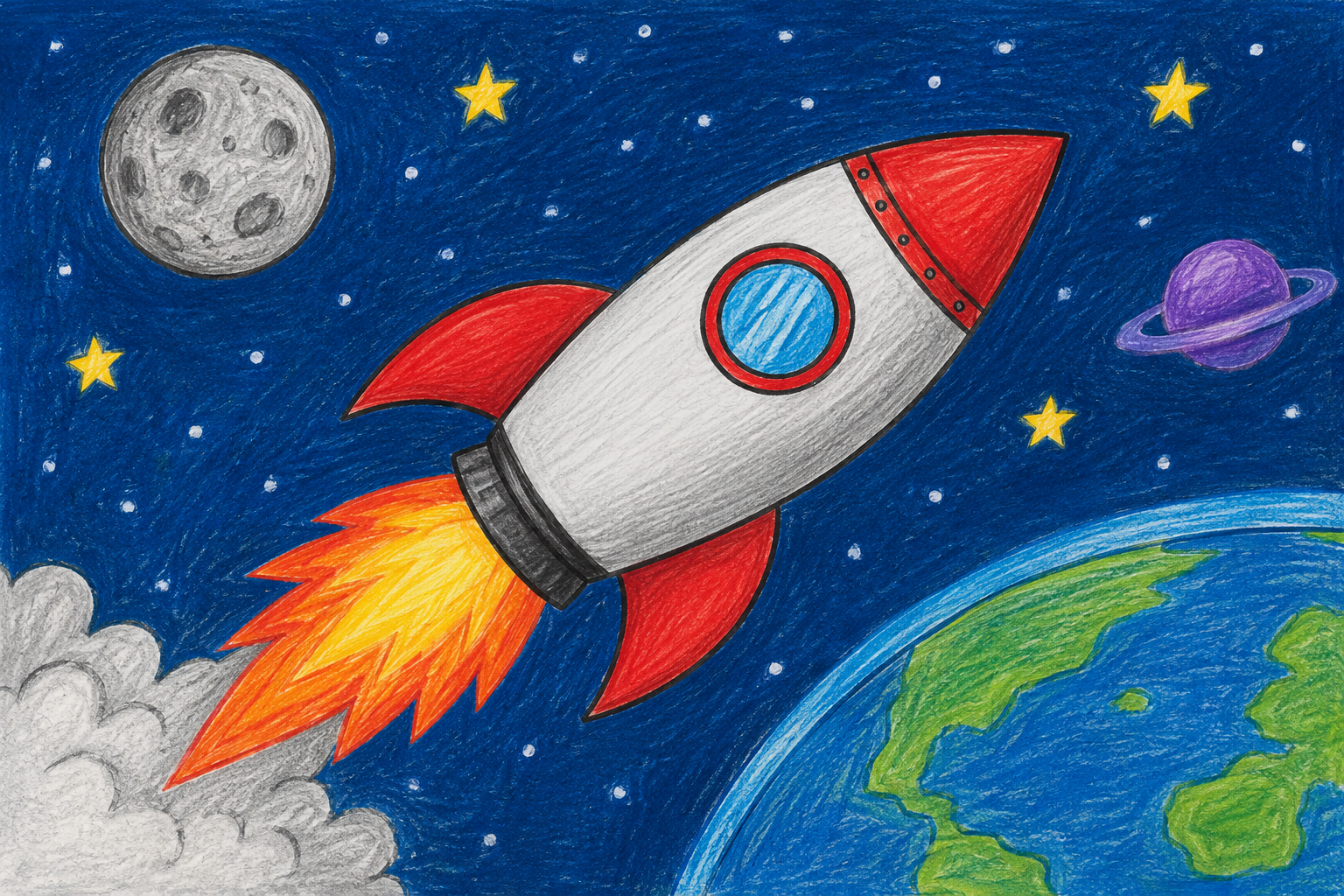
A rocket ship drawing is one of the most exciting art projects for beginners and experienced artists alike. Rockets symbolize exploration, innovation, adventure, and the limitless possibilities of space. Whether you are a student, parent, teacher, hobby artist, or aspiring illustrator, learning how to create an impressive spacecraft sketch can be both educational and enjoyable.
From simple cartoon rockets to realistic space vehicles inspired by modern aerospace engineering, there are countless approaches to drawing rockets. This comprehensive guide explores techniques, materials, design concepts, creative inspiration, and practical methods that can help anyone improve their artistic skills while creating memorable space-themed artwork.
Why Rocket Drawings Are So Popular
Rocket illustrations capture the imagination because they represent discovery and human achievement. Since the early days of space exploration, rockets have become visual symbols of progress, innovation, and scientific curiosity.
Artists often choose space themes because they offer creative freedom. A rocket can be designed realistically, stylized as a cartoon, transformed into a futuristic spacecraft, or combined with imaginative alien worlds. This flexibility makes the subject appealing to artists of every age and skill level.
Understanding the Basic Structure of a Rocket
Before beginning a rocket ship drawing, it helps to understand the basic components found in most rocket designs. Typical rockets feature a pointed nose cone, cylindrical body, fins for stability, windows, engines, and exhaust flames.
Recognizing these fundamental shapes simplifies the drawing process. Most rockets can be constructed from basic geometric forms such as circles, rectangles, triangles, and cylinders, making them accessible even for complete beginners.
Essential Materials for Better Results
The tools you choose can significantly influence the final appearance of your artwork. Simple pencil-and-paper sketches remain popular because they allow easy corrections and quick experimentation.
More advanced artists often incorporate colored pencils, markers, digital drawing tablets, fine liners, and shading tools. The best materials depend on your preferred style, desired level of detail, and artistic goals.
Comparison of Popular Rocket Drawing Tools
| Tool | Best For | Advantages | Limitations |
| Graphite Pencil | Beginners | Easy corrections and sketching | Limited color options |
| Colored Pencils | Detailed illustrations | Rich color control | Can require layering |
| Markers | Bold artwork | Vibrant appearance | Difficult to erase |
| Fine Liners | Outlines and comics | Sharp details | Less shading flexibility |
| Digital Tablet | Professional art | Unlimited editing options | Learning curve |
| Watercolors | Artistic effects | Beautiful space backgrounds | Less precision |
Planning Your Rocket Design
Many artists rush into drawing without a plan. Taking a few moments to visualize your rocket can dramatically improve composition and overall quality.
Consider whether your rocket will appear realistic, futuristic, cartoon-inspired, educational, or fantasy-themed. Defining a clear concept beforehand helps guide proportions, details, colors, and background elements.
Creating the Basic Outline
The foundation of a successful rocket ship drawing begins with simple shapes. Start with a long vertical cylinder and add a pointed cone at the top to establish the overall structure.
Next, sketch symmetrical fins on both sides of the lower section. Keeping the initial lines light allows you to make adjustments before committing to darker outlines and refined details.
Adding Windows and Exterior Details
Windows give a rocket personality and visual interest. Circular windows are common because they resemble portholes used in many spacecraft concepts and science-fiction illustrations.
Additional details such as panel lines, rivets, logos, antennas, fuel compartments, and access hatches can make a rocket appear more realistic and visually engaging without overwhelming the composition.
Understanding Perspective in Rocket Art
Perspective helps create the illusion of depth and dimension. A rocket viewed from below appears larger and more dramatic, while a side profile emphasizes shape and structure.
Experimenting with perspective transforms ordinary sketches into dynamic artwork. Even minor adjustments in viewing angle can create stronger visual impact and make the rocket feel more powerful.
How Shading Improves Realism
Shading converts flat sketches into three-dimensional objects. By identifying a light source, artists can determine where highlights and shadows should appear.
Soft gradients along the rocket body create curvature and volume. Shadows beneath fins, around windows, and near engine sections help establish depth and realism throughout the illustration.
Drawing Rocket Engines and Exhaust Effects
Rocket engines are among the most visually exciting features of spacecraft artwork. Engine nozzles can be simplified into cylinders or detailed with mechanical structures and layered components.
Adding exhaust flames, smoke trails, and energy effects introduces movement and excitement. These elements help communicate launch power and make the artwork feel alive and dynamic.
Choosing Effective Color Schemes
Color selection influences mood and visual appeal. Traditional rockets often feature white, silver, black, red, and blue combinations inspired by historical spacecraft.
Futuristic designs can incorporate neon accents, metallic surfaces, glowing engines, and imaginative color palettes. The right colors help reinforce the intended style and atmosphere of the drawing.
Creating a Space-Themed Background
A rocket rarely exists in isolation. Background elements help tell a story and create a more immersive viewing experience.
Stars, planets, galaxies, asteroids, moons, and nebulae can transform a simple illustration into a complete space scene. Even a minimal background adds context and strengthens visual impact.
Rocket Drawing for Kids
Children often enjoy simplified rocket designs featuring bold shapes, smiling faces, bright colors, and exaggerated proportions. These playful designs encourage creativity without requiring advanced techniques.
Educational rocket activities can also introduce basic concepts of science, engineering, and astronomy. Combining art and learning creates a more engaging experience for young artists.
Rocket Drawing for Beginners
Beginners should focus on mastering simple shapes before attempting highly detailed spacecraft illustrations. A straightforward design builds confidence and develops essential drawing fundamentals.
Regular practice is more important than perfection. Each sketch improves observation skills, hand control, and understanding of proportions, gradually leading to more polished artwork.
Advanced Techniques for Experienced Artists
Experienced artists often explore intricate panel details, realistic lighting, reflective metallic surfaces, and atmospheric effects. These techniques elevate spacecraft illustrations from simple sketches to professional-quality artwork.
Advanced compositions may also include launch sequences, planetary environments, docking stations, or cinematic space scenes. Such additions increase narrative depth and visual complexity.
Common Mistakes to Avoid
One frequent mistake is creating asymmetrical fins or uneven proportions. Using light guidelines can help maintain balance and consistency throughout the drawing process.
Another issue involves overcrowding the design with unnecessary details. Strategic simplicity often produces stronger and more visually appealing results than excessive complexity.
The Role of Observation and Reference Images
Studying real spacecraft and rocket photographs provides valuable insight into structure, engineering, and design aesthetics. Observation helps artists develop greater accuracy and understanding.
Reference images should inspire rather than limit creativity. Many successful artists combine real-world inspiration with imaginative concepts to create unique and memorable rocket artwork.
Digital Rocket Illustration Techniques
Digital art platforms offer powerful tools for creating spacecraft illustrations. Layers, brushes, blending modes, and transformation tools simplify experimentation and revision.
Artists can quickly test color schemes, lighting effects, and composition variations without restarting the entire project. This flexibility makes digital workflows increasingly popular.
Inspiration from Space Exploration
The history of space travel provides endless inspiration for artists. Rockets associated with lunar missions, satellite launches, and modern commercial spaceflight offer fascinating design references.
As science and technology continue advancing, new spacecraft concepts emerge regularly. These developments provide fresh ideas for artists interested in futuristic themes and innovation.
Storytelling Through Space Art
Every rocket illustration can tell a story. A spacecraft leaving Earth suggests adventure, while a vessel approaching a distant planet evokes discovery and mystery.
Adding narrative elements encourages viewers to imagine what happened before and after the scene. Strong storytelling often makes artwork more memorable and emotionally engaging.
Building Consistent Drawing Skills
Improvement comes through consistent practice rather than occasional bursts of effort. Short daily drawing sessions often produce better long-term results than infrequent marathon sessions.
Maintaining a sketchbook dedicated to rockets, spacecraft, and science-fiction concepts helps track progress while encouraging experimentation with new techniques and styles.
Educational Benefits of Rocket Illustration
Drawing spacecraft develops more than artistic ability. It strengthens observation, concentration, patience, problem-solving, and spatial reasoning skills.
Teachers frequently incorporate space-themed art projects into educational programs because they combine creativity with science, technology, engineering, and mathematics concepts in an accessible format.
Creative Variations to Explore
Once basic skills are established, artists can experiment with unique interpretations. Steampunk rockets, retro-futuristic spacecraft, cartoon spaceships, and fantasy-inspired vessels all offer exciting creative possibilities.
Exploring different styles prevents artistic stagnation and encourages innovation. Each variation introduces new design challenges and opportunities for growth.
What Professional Illustrators Recommend
Professional artists often emphasize the importance of mastering fundamentals before pursuing highly complex designs. Understanding shape, proportion, perspective, and lighting provides a foundation for every successful illustration.
As one popular artistic principle states, “Simple shapes build complex masterpieces.” This concept applies perfectly to spacecraft drawing, where sophisticated designs often begin with basic geometric forms.
Conclusion
Learning rocket ship drawing is both rewarding and enjoyable because it combines creativity, imagination, and technical skill. From simple beginner sketches to highly detailed space illustrations, rockets offer endless opportunities for artistic exploration and growth.
By understanding structure, practicing foundational techniques, experimenting with color and perspective, and drawing consistently, artists can steadily improve their abilities. Whether your goal is educational artwork, professional illustration, children’s projects, or personal enjoyment, mastering rocket-themed art opens the door to a universe of creative possibilities.
FAQ
What is the easiest way to start a rocket ship drawing?
Start with basic shapes such as a cylinder, triangle, and fins. This approach makes rocket ship drawing much easier for beginners and helps establish proper proportions.
How can I make my rocket ship drawing look realistic?
Focus on shading, perspective, metallic textures, and accurate structural details. These elements add depth and realism to any rocket ship drawing.
Which colors work best for rocket illustrations?
White, silver, black, red, and blue are common choices. However, a rocket ship drawing can use any color palette depending on the desired style and theme.
Is rocket drawing suitable for children?
Yes, rocket ship drawing is an excellent activity for children because it encourages creativity while introducing concepts related to science and space exploration.
Can I create a rocket ship drawing digitally?
Absolutely. Digital software provides layers, brushes, and editing tools that make rocket ship drawing flexible, efficient, and highly customizable.
How often should I practice rocket sketches?
Regular practice, even for a few minutes each day, helps improve your rocket ship drawing skills faster than occasional long drawing sessions.
What background works best with rocket artwork?
Space environments featuring stars, planets, moons, galaxies, and nebulae complement a rocket ship drawing and help create a more immersive scene.
You May Also Read: USAJOBS