

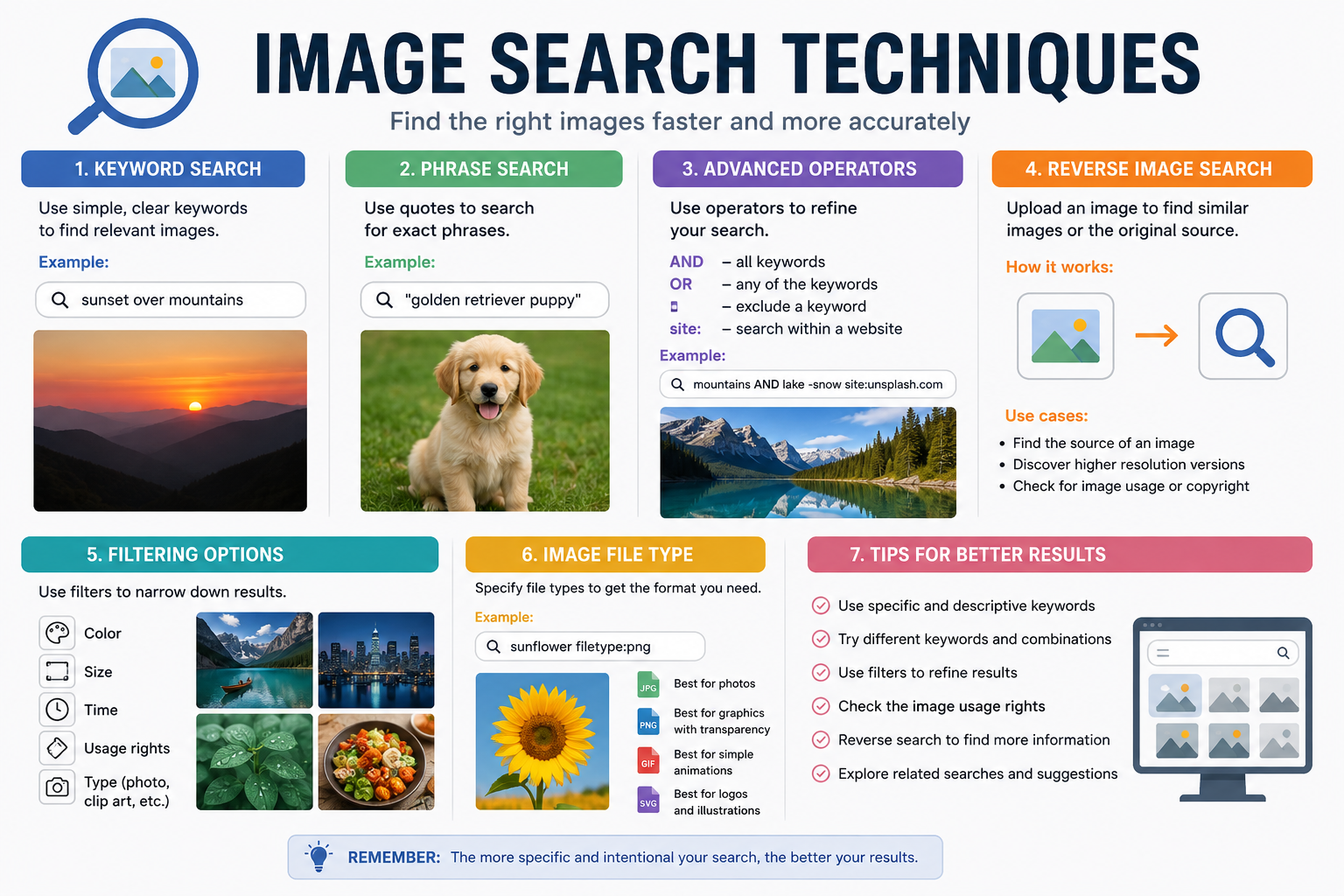
Finding the right image online sounds simple until you need something highly specific, copyright-safe, high resolution, or visually similar to an existing photo. That is where advanced image search techniques become essential. Whether you are a marketer, designer, researcher, student, journalist, eCommerce seller, or everyday internet user, understanding how modern visual search works can dramatically improve the quality and speed of your results.
Today’s search engines rely on AI-powered recognition, metadata analysis, visual matching, and contextual indexing to interpret images more intelligently than ever before. Effective image search techniques help users locate original sources, identify manipulated visuals, discover copyright-free media, track brand assets, and uncover visually related content across the web. This guide explores the most effective strategies, tools, workflows, and optimization methods to help you master visual search in a practical and professional way.
Why Image Search Matters More Than Ever
Visual content dominates digital communication across websites, social media, online stores, and publishing platforms. As businesses and creators produce more imagery every day, locating accurate and relevant visuals has become increasingly challenging. Strong image search techniques help users cut through this overload and quickly find meaningful results.
Search engines have also evolved far beyond simple filename matching. Modern platforms analyze colors, shapes, objects, faces, text inside images, and surrounding webpage context. This means users who understand how search algorithms interpret visuals gain a major advantage when searching for product photos, research references, inspiration, or authentic media assets.
How Modern Image Search Engines Actually Work
Most people assume search engines only look at image titles or captions, but the process is far more advanced. AI systems scan patterns, objects, textures, embedded metadata, surrounding text, and user behavior signals to determine relevance. These systems continuously learn from billions of interactions to improve visual accuracy.
Advanced image search techniques work best when users align with how algorithms process information. Instead of vague queries, strategic searches use modifiers, filters, reverse lookup methods, and contextual clues. This improves precision while reducing irrelevant results that waste time and attention.
Core Types of Image Search Techniques
There are several major categories of visual search methods, and each serves a different purpose depending on the user’s goal. Some methods prioritize similarity matching, while others focus on originality, licensing, or contextual relevance.
Understanding these categories helps users choose the right strategy faster. Reverse image search is ideal for source verification, while keyword-driven image discovery works better for concept exploration. Visual AI recognition excels at identifying objects, landmarks, and products from uploaded images.
Reverse Image Search Explained
Reverse lookup remains one of the most powerful image search techniques available online. Instead of typing keywords, users upload an image or paste a URL, allowing the search engine to locate visually similar versions across the internet.
This method is especially useful for detecting fake images, identifying original creators, locating higher-resolution versions, or uncovering unauthorized usage. Journalists, cybersecurity analysts, marketers, and copyright professionals regularly use reverse image workflows to validate authenticity and monitor distribution patterns.
Keyword-Based Image Search Strategies
Traditional keyword searching still plays a central role in image discovery. The difference between average and expert users often comes down to how queries are structured. Precise language dramatically improves search quality and reduces irrelevant visual clutter.
Experienced users combine descriptive nouns, modifiers, colors, styles, file types, orientations, and context signals. Instead of searching “car,” a refined query like “vintage red convertible sunset side profile” produces far more targeted results. Effective image search techniques rely heavily on this kind of intentional phrasing.
Using Search Filters to Improve Accuracy
Most users ignore filtering tools even though they significantly refine visual search outcomes. Filters allow users to narrow results by size, color, usage rights, date, transparency, image type, and orientation.
These controls are essential for professional workflows. Designers may need transparent PNG files, bloggers may require royalty-free visuals, and publishers may prioritize large-resolution images. Applying filters early helps users avoid sorting through thousands of irrelevant results manually.
Comparing Popular Image Search Platforms
Different search engines excel in different areas of visual discovery. Some prioritize AI object recognition, while others perform better with artistic content, product searches, or copyright filtering.
The table below compares major platforms commonly used in professional image search workflows.
| Platform | Best Use Case | Strengths | Limitations |
| Google Images | General visual discovery | Massive index, strong AI matching | Can surface duplicate content |
| Bing Visual Search | Product and object recognition | Strong visual AI capabilities | Smaller database than Google |
| TinEye | Reverse image verification | Excellent for source tracking | Limited conceptual discovery |
| Pinterest Lens | Style and inspiration search | Strong aesthetic matching | Less useful for research |
| Shutterstock Search | Commercial stock assets | High-quality licensed media | Paid content focus |
| Getty Images | Editorial and news visuals | Trusted professional archive | Expensive licensing |
Choosing the right platform depends entirely on the objective. Researchers often prefer TinEye for verification, while marketers lean toward Google Images or Shutterstock for scalable creative discovery.
The Growing Role of AI in Visual Search
Artificial intelligence has transformed image search from a metadata-driven system into a visual understanding engine. Modern AI can identify objects, facial expressions, scenes, landmarks, typography, and even emotional tone within images.
This evolution makes image search techniques increasingly intuitive. Users can now upload partial screenshots, blurry photos, or cropped images and still receive meaningful matches. AI-powered visual search continues to narrow the gap between human perception and machine interpretation.
Image Metadata and Why It Matters
Metadata acts like hidden informational DNA inside image files. It can contain camera details, timestamps, geolocation, authorship information, editing history, and licensing data.
Many advanced image search techniques involve analyzing metadata to verify authenticity or trace image origins. Investigators and digital analysts often rely on metadata alongside reverse lookup methods to identify manipulated visuals or confirm publication timelines.
Finding Copyright-Free and Licensed Images
One of the biggest mistakes online creators make is assuming publicly visible images are automatically free to use. Copyright laws still apply even when content appears easily accessible through search engines.
Smart image search techniques include usage-right filtering and license verification. Users should prioritize Creative Commons resources, public domain libraries, or properly licensed stock platforms when publishing commercial or branded content.
Optimizing Images for Better Search Visibility
Image SEO is critical for businesses and publishers seeking visibility in visual search results. Search engines cannot interpret images perfectly without supporting optimization signals.
Proper filenames, descriptive alt text, compressed file sizes, schema markup, and contextual page relevance all improve discoverability. Websites that optimize images strategically often gain additional traffic through image-based search engines and visual recommendation systems.
Mobile Visual Search Is Reshaping User Behavior
Smartphone cameras have fundamentally changed how people search online. Instead of typing descriptions, users increasingly point their camera at objects, products, landmarks, or documents to initiate searches instantly.
This trend has accelerated the adoption of AI-driven image search techniques across retail, travel, education, and social media. Visual commerce especially benefits from this shift because consumers can identify and purchase products directly from photographed items.
Image Search Techniques for eCommerce Brands
Online retailers use visual search to simplify product discovery and reduce customer friction. Consumers often struggle to describe fashion items, furniture styles, or accessories using traditional keywords.
By implementing AI visual recognition systems, eCommerce brands allow users to upload photos and discover similar inventory instantly. This improves conversion rates while creating a more intuitive shopping experience across mobile and desktop platforms.
Detecting Fake Images and Misinformation
Misinformation spreads rapidly through manipulated visuals, recycled photographs, and misleading context. Reverse lookup tools help users investigate whether an image has appeared elsewhere online before.
Professional fact-checkers rely heavily on image search techniques to verify timelines, identify edited content, and locate original publication sources. Combining reverse search with metadata analysis provides stronger evidence during digital investigations.
Using Image Search for Competitive Research
Marketers and SEO professionals frequently use visual search tools to analyze competitors. Product imagery, infographics, design trends, branding styles, and ad creatives can all reveal strategic positioning insights.
Effective image search techniques help brands identify content gaps, monitor unauthorized image use, and understand visual trends shaping their industry. This creates stronger creative direction and smarter content planning decisions.
The Psychology Behind Visual Discovery
Humans process visual information faster than text, which is one reason image-based discovery continues to grow across digital platforms. Images create emotional reactions, improve memory retention, and simplify decision-making.
Modern search engines increasingly prioritize visual engagement signals because users naturally respond to compelling imagery. Understanding this behavior helps marketers and publishers create visuals optimized for both discoverability and audience interaction.
Common Mistakes People Make During Image Searches
Many users rely on broad, generic searches that generate overwhelming and irrelevant results. Others ignore filters, overlook licensing rules, or fail to verify image authenticity before sharing content publicly.
Strong image search techniques require precision, patience, and strategic refinement. Small adjustments like adding contextual keywords, filtering by date, or uploading cropped versions can dramatically improve accuracy and relevance.
Best Practices for Faster Visual Search Results
Professional researchers often use layered workflows to speed up image discovery. They combine keyword queries, reverse search tools, metadata analysis, and filtering techniques instead of depending on one method alone.
This multi-step approach produces more reliable outcomes while reducing time spent browsing irrelevant content. Consistency matters because advanced image search techniques become significantly more effective when users develop structured habits and repeatable processes.
Image Recognition Technology and Machine Learning
Machine learning models continuously improve visual recognition by analyzing enormous datasets of labeled imagery. These systems learn patterns related to objects, textures, environments, and human features over time.
As these technologies evolve, image search techniques become more contextual and predictive. Search engines increasingly understand user intent instead of relying solely on literal matches, making visual discovery faster and more personalized.
Voice Search and Image Search Convergence
Voice assistants and visual search tools are beginning to overlap in meaningful ways. Users can now combine spoken commands with camera-based searches to create hybrid discovery experiences.
For example, someone might photograph a plant while asking for care instructions simultaneously. This convergence represents the next evolution of image search techniques and reflects how search behavior is becoming more natural and multimodal.
The Future of Visual Search Technology
Visual search is moving toward real-time augmented reality integration, predictive recognition, and contextual personalization. AI systems will increasingly anticipate what users want before they finish searching.
Experts also expect image search techniques to expand into wearable technology, smart glasses, and immersive commerce experiences. As computational vision improves, the distinction between physical observation and digital search will continue to blur.
Expert Insight on the Power of Visual Search
“Visual search is becoming the bridge between what people see and what they want to know.” This observation reflects the growing role of image recognition in how humans interact with digital information.
The quote highlights why businesses, publishers, and creators must adapt their strategies for a visually driven search ecosystem. Companies that ignore evolving image search techniques risk losing visibility in an increasingly AI-powered internet landscape.
Conclusion
Visual discovery has evolved from a basic convenience into a critical digital skill. Whether users want to verify authenticity, improve SEO performance, discover products, locate inspiration, or protect intellectual property, mastering modern image search techniques creates measurable advantages.
As AI continues reshaping search behavior, visual literacy will become even more important across industries. Users who understand how image recognition systems work, how to refine queries strategically, and how to validate sources will navigate the digital world with greater speed, accuracy, and confidence.
FAQ
What are image search techniques?
Image search techniques are methods used to locate, identify, verify, or analyze visual content online through keywords, reverse lookup tools, filters, metadata, and AI recognition systems.
How does reverse image search work?
Reverse image search compares an uploaded image against indexed visuals online to find matches, similar content, original sources, or altered versions using advanced image search techniques.
Which platform is best for image search?
The best platform depends on the goal. Google Images works well for general discovery, TinEye excels at verification, and Pinterest Lens is useful for visual inspiration.
Why are image search techniques important for SEO?
Image search techniques help businesses optimize visual content for discoverability, improve search visibility, increase organic traffic, and enhance user engagement across digital platforms.
Can image search identify fake photos?
Yes, reverse lookup tools and metadata analysis can help users verify authenticity, detect manipulated visuals, and identify misleading or recycled imagery online.
Are all images found online free to use?
No, many images remain protected by copyright laws even if they appear publicly online. Proper licensing and usage-right verification are essential before publishing content.
How can I improve image search accuracy?
Use detailed keywords, apply filters, crop unnecessary elements, combine reverse search tools, and refine queries strategically for better visual search results.
You May Also Read: Euroyungs Com