

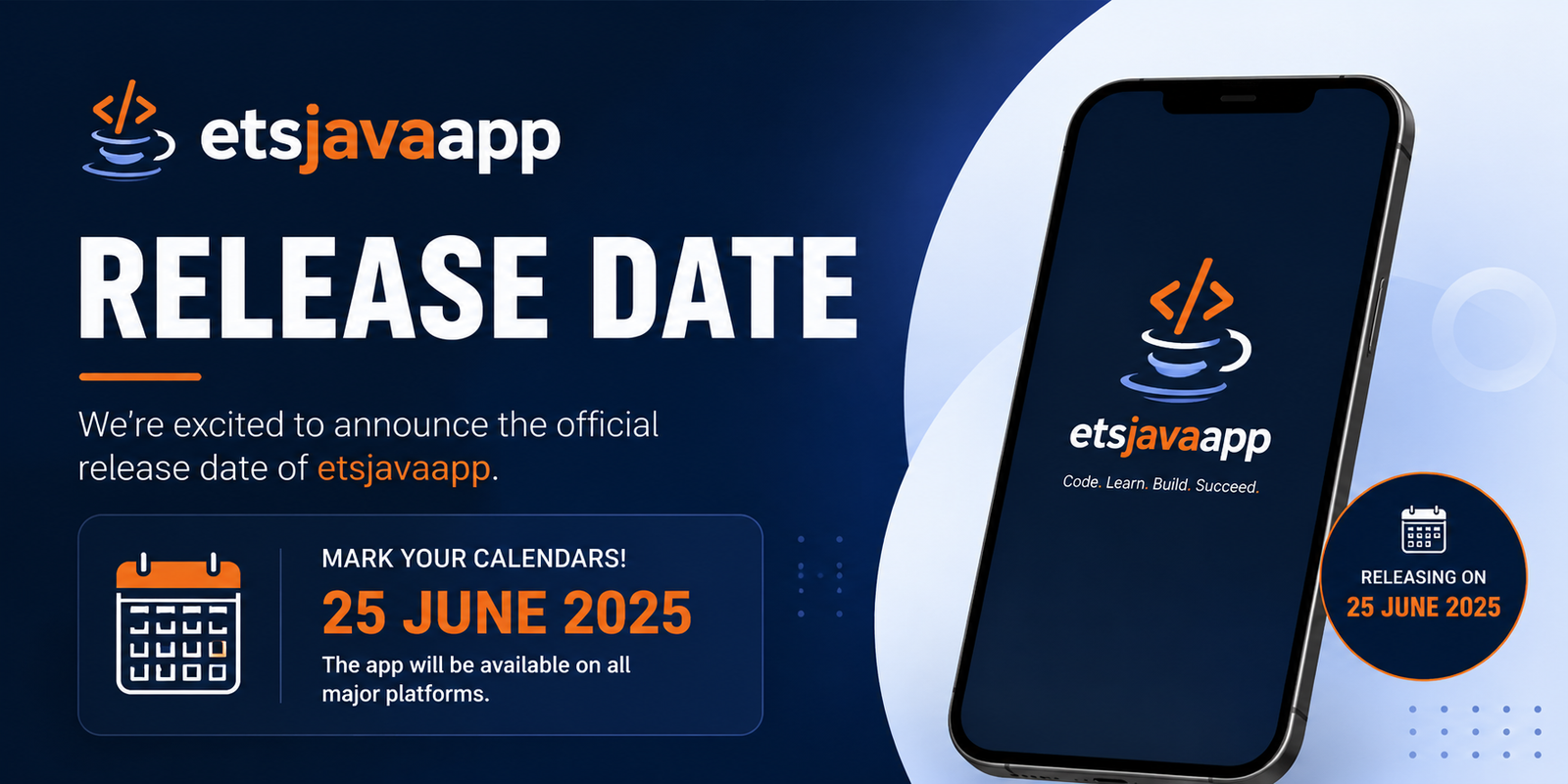
The tech community has recently shown growing interest in the etsjavaapp release date, especially among developers, enterprise users, Java enthusiasts, and businesses searching for scalable software ecosystems. While official confirmations remain limited, discussions surrounding ETSJavaApp continue to expand across developer communities and technology forums.
This guide explores everything currently known about the ETSJavaApp ecosystem, including expected launch timelines, possible features, development trends, industry relevance, compatibility expectations, security considerations, enterprise implications, and future adoption potential. If you are searching for accurate, comprehensive insights into the etsjavaapp release date, this article is designed to serve as a definitive resource.
Understanding What ETSJavaApp Is
ETSJavaApp appears to be an emerging Java-based software environment or application framework aimed at improving enterprise-level development workflows. Although public information remains relatively scarce, early references suggest it may focus on modular architecture, cloud compatibility, and scalable deployment strategies.
The growing search interest around the etsjavaapp release date indicates that developers and organizations expect the platform to address modern Java ecosystem challenges such as performance optimization, API integration, containerization, and streamlined backend operations. This interest aligns with broader industry demand for enterprise-ready Java solutions.
Why the ETSJavaApp Release Date Matters
Release dates matter because they shape development planning, infrastructure preparation, software budgeting, and integration roadmaps. Businesses considering migration to a new platform often need substantial lead time before implementation begins.
The attention surrounding the etsjavaapp release date also reflects the increasing competitiveness of Java application frameworks. Organizations want early access to tools that may improve productivity, reduce operational costs, and simplify distributed application management.
Current Status of ETSJavaApp Development
At present, there is no universally confirmed official launch announcement publicly detailing the exact etsjavaapp release date. However, multiple online discussions indicate that development activity may already be underway behind the scenes.
Industry observers speculate that the project could currently be in beta testing, internal deployment evaluation, or pre-release infrastructure validation. This phase is common for enterprise-grade software products that require extensive testing before wide-scale rollout.
Possible Timeline Expectations
Technology analysts frequently estimate software launch windows based on hiring trends, development cycles, repository activity, and early ecosystem references. In the case of ETSJavaApp, speculation suggests that rollout announcements could emerge in stages rather than through a single global release.
The conversation around the etsjavaapp release date has intensified because organizations increasingly depend on Java-centered environments for cloud-native development. A phased release strategy could allow developers to test integrations before broader commercial adoption.
Potential Features Expected in ETSJavaApp
Early expectations surrounding ETSJavaApp suggest a strong focus on performance, scalability, and enterprise compatibility. Developers anticipate advanced runtime management, API handling tools, and seamless deployment automation.
There is also speculation that the platform could include microservices support, modular Java architecture, enhanced debugging environments, and simplified dependency management. These capabilities would position ETSJavaApp competitively within modern enterprise development ecosystems.
Enterprise Demand Driving Interest
Enterprise software environments continue evolving toward distributed systems and cloud-first operations. As a result, companies actively monitor new frameworks capable of supporting large-scale application infrastructure with reduced complexity.
The increasing visibility of the etsjavaapp release date highlights how businesses are searching for adaptable Java-based platforms that can integrate with DevOps pipelines, containerized systems, and hybrid cloud architectures without major compatibility barriers.
Java Ecosystem Trends Supporting ETSJavaApp
Java remains one of the most trusted enterprise programming ecosystems globally due to its portability, stability, and extensive tooling support. Modern Java development now prioritizes faster deployment cycles, lightweight frameworks, and cloud-native performance.
If ETSJavaApp successfully aligns with these trends, the platform could attract developers seeking alternatives or complements to established Java ecosystems. This possibility is one reason why the etsjavaapp release date continues attracting significant attention online.
Expected Technical Architecture
While official documentation remains limited, experts believe ETSJavaApp may rely on layered architecture principles that improve modularity and maintainability. Such systems typically separate presentation layers, business logic, and infrastructure services for better scalability.
This architectural approach would align with modern Java enterprise standards where applications require flexible deployment models, API-driven communication, and distributed workload optimization across cloud environments.
Anticipated Cloud Integration Capabilities
Cloud integration is no longer optional for enterprise software. Modern applications must support scalable hosting, automated deployment, and cross-platform interoperability across public and private cloud providers.
Many developers following the etsjavaapp release date expect native support for container orchestration platforms, serverless integrations, and Kubernetes deployment strategies. These features would significantly strengthen adoption potential among enterprise users.
Security Expectations for ETSJavaApp
Security has become one of the defining factors for enterprise platform adoption. Organizations now prioritize identity management, encrypted communication, secure APIs, and role-based access systems before adopting new frameworks.
The anticipation around the etsjavaapp release date partly stems from expectations that the platform will implement modern cybersecurity practices, including authentication controls, vulnerability monitoring, and secure runtime environments for sensitive enterprise workloads.
Performance Optimization Possibilities
Performance optimization remains central to modern software architecture. Developers increasingly expect faster startup times, lower memory consumption, and efficient resource allocation from enterprise-grade Java environments.
If ETSJavaApp incorporates runtime tuning and lightweight service deployment, it could compete effectively against modern Java frameworks emphasizing reduced latency and higher throughput under enterprise-scale workloads.
Developer Community Expectations
Developer communities often influence software adoption rates through open-source discussions, testing feedback, and ecosystem collaboration. Interest in ETSJavaApp appears to be growing gradually within Java-focused technical circles.
The curiosity surrounding the etsjavaapp release date also reflects developer demand for tools that reduce complexity without sacrificing enterprise reliability. Simpler workflows combined with scalable infrastructure support could help the platform gain momentum quickly.
Comparison With Existing Java Platforms
The Java ecosystem already contains several mature frameworks and enterprise platforms. ETSJavaApp would therefore need to differentiate itself through developer experience, deployment simplicity, or operational efficiency.
Below is a structured comparison showing how ETSJavaApp could potentially position itself against broader Java ecosystem expectations.
| Feature Area | Traditional Java Platforms | Expected ETSJavaApp Direction |
| Deployment Complexity | Moderate to high | Simplified automation |
| Cloud Compatibility | Often requires customization | Potential native cloud focus |
| Performance Optimization | Varies by framework | Expected lightweight runtime |
| Scalability | Strong but configuration-heavy | Possibly streamlined scaling |
| Developer Experience | Mature but sometimes complex | Anticipated usability improvements |
| Security Features | Enterprise-grade | Modern integrated security |
| Microservices Support | Available with setup | Likely core functionality |
| Container Integration | Requires tooling layers | Expected built-in compatibility |
The Role of Microservices in ETSJavaApp
Microservices architecture has transformed enterprise software development by enabling modular, independently deployable services. Companies increasingly adopt microservices to improve scalability and accelerate development cycles.
The speculation surrounding the etsjavaapp release date frequently includes discussions about microservices support because businesses now prioritize flexible systems capable of handling rapid feature deployment across distributed environments.
Possible DevOps Integration
DevOps practices have become foundational for modern enterprise engineering teams. Continuous integration, automated testing, and deployment pipelines now influence software purchasing and platform selection decisions.
ETSJavaApp may gain substantial traction if it provides native DevOps compatibility with CI/CD pipelines, infrastructure automation tools, and cloud deployment workflows. Such integration could dramatically reduce operational overhead for engineering teams.
Why Developers Are Monitoring the Release Closely
Developers constantly search for frameworks that balance productivity, performance, and maintainability. New platforms attract attention when they promise meaningful workflow improvements or infrastructure simplification.
The growing online interest in the etsjavaapp release date suggests that developers see potential for innovation within the platform. Even limited early references have generated curiosity due to the ongoing evolution of enterprise Java ecosystems.
Potential Use Cases Across Industries
If ETSJavaApp launches with enterprise-grade capabilities, it could support industries such as finance, healthcare, logistics, education, and e-commerce. These sectors depend heavily on scalable Java infrastructure.
Applications may include transaction systems, API management platforms, cloud services, enterprise dashboards, automation tools, and distributed backend systems requiring secure, reliable runtime environments.
Common Misconceptions About ETSJavaApp
One common misconception is that ETSJavaApp has already received a confirmed public release announcement. In reality, much of the current information remains speculative or based on limited references circulating online.
Another misconception involves assuming the platform is only for large enterprises. Modern Java ecosystems increasingly focus on accessibility for startups, mid-sized businesses, and independent developers seeking scalable infrastructure tools.
Market Conditions Influencing the Release
Software launches are often influenced by broader technology trends, competitive pressures, infrastructure readiness, and cybersecurity considerations. Enterprise platforms rarely launch without extensive preparation and testing.
The attention surrounding the etsjavaapp release date reflects broader industry movement toward cloud-native Java solutions capable of handling distributed workloads, automation requirements, and hybrid deployment environments.
Potential Challenges Facing ETSJavaApp
Every emerging software platform faces adoption challenges, especially within competitive ecosystems. ETSJavaApp may need to prove compatibility, long-term support reliability, and developer accessibility before achieving widespread enterprise trust.
Documentation quality, onboarding simplicity, migration support, and ecosystem maturity will likely determine how quickly organizations adopt the platform after the official etsjavaapp release date becomes public.
The Importance of Documentation and Community Support
Strong documentation often determines whether a framework succeeds commercially. Developers prefer ecosystems with clear tutorials, implementation guides, troubleshooting resources, and active support communities.
If ETSJavaApp launches with robust documentation and collaborative developer engagement, it could significantly improve adoption rates and establish credibility within enterprise engineering circles.
Enterprise Scalability Expectations
Scalability remains essential for organizations operating global digital infrastructure. Enterprise applications must handle fluctuating workloads without compromising reliability or performance consistency.
The growing curiosity around the etsjavaapp release date suggests businesses expect scalable infrastructure management, efficient concurrency handling, and reliable distributed system performance from the upcoming platform.
Mobile and Cross-Platform Possibilities
Cross-platform compatibility continues influencing enterprise technology strategies. Businesses increasingly prefer frameworks that support web, cloud, and mobile interoperability without requiring major architectural restructuring.
Although official details remain limited, some observers believe ETSJavaApp could eventually expand toward broader application ecosystems supporting multi-environment deployment and integrated service communication.
Industry Experts on Emerging Java Platforms
Technology consultant Martin Fowler once observed, “Any fool can write code that a computer can understand. Good programmers write code that humans can understand.”
This quote resonates strongly with the growing conversation around the etsjavaapp release date, as developers increasingly prioritize frameworks that simplify maintenance, collaboration, and long-term scalability rather than focusing only on raw functionality.
How Businesses May Prepare for ETSJavaApp
Organizations interested in ETSJavaApp can begin preparing by evaluating current Java infrastructure, identifying deployment bottlenecks, and assessing modernization opportunities within existing systems.
Technical teams may also benefit from strengthening cloud-native expertise, containerization knowledge, and API-driven development practices since these capabilities are likely relevant to the platform’s future ecosystem.
The Role of Automation in Modern Java Platforms
Automation now drives efficiency across software development lifecycles. From testing to deployment, enterprises seek frameworks capable of reducing repetitive operational tasks while improving system reliability.
ETSJavaApp could become especially attractive if automation features are deeply integrated into the platform architecture. This possibility is one reason the etsjavaapp release date continues generating anticipation among developers and IT leaders.
Predictions for Initial Adoption
Initial adoption will likely depend on developer accessibility, enterprise trust, and compatibility with existing infrastructure. Early adopters often include startups, innovation-focused engineering teams, and organizations modernizing legacy systems.
If the platform demonstrates strong stability and practical deployment benefits shortly after the etsjavaapp release date, adoption momentum could expand rapidly through community recommendations and enterprise pilot programs.
Could ETSJavaApp Influence the Java Ecosystem?
Emerging frameworks occasionally reshape developer expectations by introducing better workflows, improved performance standards, or more intuitive architecture models. ETSJavaApp may contribute to this ongoing evolution if its launch delivers meaningful innovation.
The modern Java ecosystem remains highly competitive, yet there is still demand for solutions that simplify enterprise scalability while maintaining Java’s traditional strengths in reliability and portability.
Conclusion
The growing interest in the etsjavaapp release date highlights the technology industry’s ongoing demand for modern, scalable, Java-based enterprise platforms. Although official release information remains limited, anticipation continues building due to expectations surrounding cloud compatibility, automation, security, performance optimization, and developer usability.
As businesses increasingly transition toward cloud-native infrastructure and distributed application environments, platforms like ETSJavaApp could play a meaningful role in shaping future enterprise development strategies. Developers and organizations should continue monitoring announcements, technical previews, and community discussions for credible updates regarding the official etsjavaapp release date and broader ecosystem rollout.
FAQ
What is ETSJavaApp?
ETSJavaApp appears to be an emerging Java-focused software platform or framework designed for scalable enterprise development and modern deployment environments.
Is the ETSJavaApp release date officially confirmed?
At the moment, there is no universally confirmed public announcement specifying the exact etsjavaapp release date, though speculation and developer discussions continue online.
Why is the ETSJavaApp release date getting attention?
The etsjavaapp release date is attracting interest because developers expect the platform to support cloud-native development, microservices architecture, automation, and enterprise scalability.
Will ETSJavaApp support cloud deployment?
Although official technical documentation remains limited, many observers expect strong cloud integration capabilities based on current enterprise Java development trends.
Could ETSJavaApp compete with existing Java frameworks?
Yes, ETSJavaApp could potentially compete if it delivers simplified deployment, improved developer experience, modern security tools, and efficient scalability.
Who may benefit from ETSJavaApp?
Developers, enterprise organizations, startups, DevOps teams, and businesses modernizing Java infrastructure could all benefit from the platform depending on its final capabilities.
How should businesses prepare before the ETSJavaApp release date?
Organizations can prepare by reviewing current Java infrastructure, strengthening cloud-native expertise, and improving DevOps automation workflows ahead of the official launch.
You May Also Read: How Long Can I Live With Pavatalgia?