

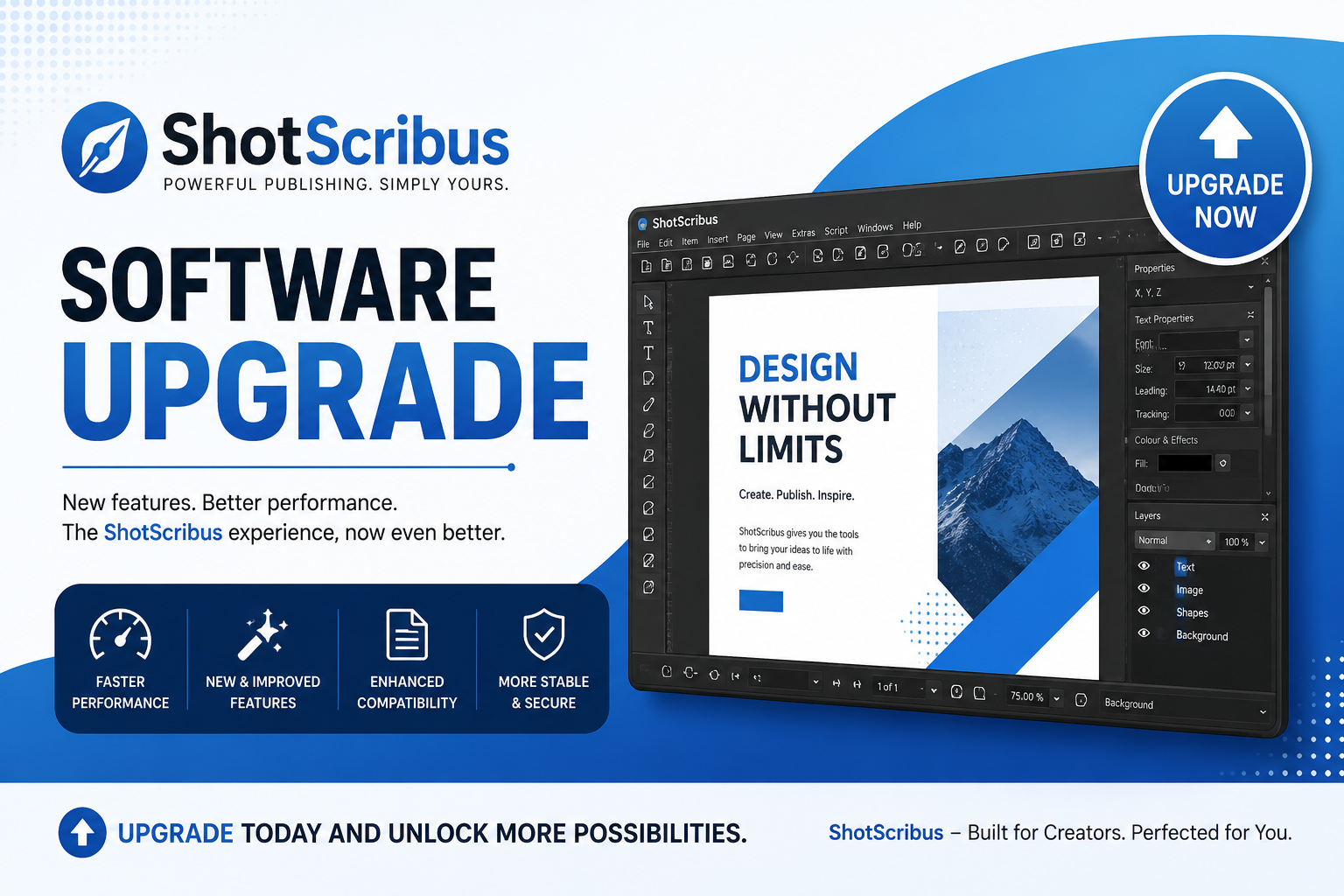
Upgrading creative software can feel risky, especially when production timelines, client projects, and existing workflows depend on stability. A modern shotscribus software upgrade promises faster rendering, smoother collaboration, better security, and advanced publishing tools, but many users still hesitate because of compatibility concerns and migration challenges.
This comprehensive guide explains everything professionals, hobbyists, publishers, designers, and digital creators should know about the latest ShotScribus environment. From installation strategy to feature comparisons and troubleshooting insights, this article explores the practical realities behind a successful shotscribus software upgrade while helping users make informed decisions with confidence.
Understanding the Purpose of a ShotScribus Software Upgrade
A modern publishing and design platform must evolve continuously to support new operating systems, improved hardware acceleration, and changing file standards. The primary purpose of a shotscribus software upgrade is to improve performance, usability, reliability, and compatibility across professional publishing workflows without disrupting the user experience.
Many users assume upgrades only introduce cosmetic changes, but that misconception overlooks major backend improvements. A well-designed shotscribus software upgrade can enhance export stability, optimize memory management, reduce crash frequency, and improve integration with creative ecosystems like PDF workflows, typography tools, and digital asset systems.
Why Businesses and Creators Prioritize Software Upgrades
Creative professionals operate in increasingly competitive environments where productivity matters as much as creativity. Teams that postpone a shotscribus software upgrade often encounter outdated plugins, unsupported file types, and performance bottlenecks that slow production cycles and affect deliverables.
Organizations also prioritize upgrades because cybersecurity threats evolve rapidly. Modern software releases typically include critical patches, encryption improvements, and vulnerability fixes that protect sensitive project files and publishing environments from exploitation or corruption.
Core Features Introduced in Recent Versions
Recent versions of ShotScribus have focused heavily on workflow efficiency and interface refinement. Users frequently report smoother navigation, faster project loading, enhanced autosave systems, and more intelligent layout handling after completing a shotscribus software upgrade.
Typography improvements are another major highlight. Advanced font rendering, expanded OpenType support, and refined kerning controls allow designers to create cleaner, more professional layouts with greater precision across print and digital publishing projects.
Improved Performance and Speed Enhancements
Performance optimization is often the most noticeable benefit after a shotscribus software upgrade. Many users experience reduced lag during large document editing, especially when working with image-heavy layouts or multi-page publishing projects.
Rendering improvements also reduce export times significantly. Modern versions typically use smarter caching systems and better resource allocation, allowing users to preview high-resolution graphics more efficiently while maintaining smoother editing responsiveness.
User Interface Changes and Workflow Improvements
Software interfaces can dramatically influence productivity, particularly for professionals who spend hours inside publishing applications daily. A refined shotscribus software upgrade often includes cleaner menu structures, customizable toolbars, and simplified navigation systems that reduce repetitive actions.
Some users initially resist interface changes because familiarity feels efficient. However, updated layouts frequently improve long-term usability by minimizing clutter and placing commonly used functions within easier reach, especially for multitasking creative workflows.
Compatibility With Modern Operating Systems
Operating system compatibility is one of the strongest reasons to complete a shotscribus software upgrade. Older software versions may function inconsistently on newer systems, causing display glitches, driver conflicts, or unexpected crashes during production work.
Modern upgrades are usually optimized for current Windows, macOS, and Linux environments. This ensures better hardware utilization, improved display scaling on high-resolution monitors, and more reliable communication with updated printers, scanners, and external devices.
Security Benefits of Upgrading
Cybersecurity is often overlooked in creative software discussions, yet publishing applications regularly handle sensitive client documents and proprietary media assets. A modern shotscribus software upgrade typically includes important security fixes that protect users against newly discovered vulnerabilities.
Security-focused updates may also improve file validation processes and reduce the risk of corrupted imports. This becomes especially important in collaborative environments where files move frequently between freelancers, agencies, publishers, and production teams.
Comparing Older and Newer ShotScribus Versions
The difference between legacy and current versions becomes clearer when comparing functionality side by side. Older versions may remain usable for basic projects, but newer releases usually provide superior speed, reliability, and compatibility across modern workflows.
| Feature Area | Older Versions | Newer Versions After Upgrade |
| Export Speed | Moderate | Faster rendering and exporting |
| Font Support | Limited advanced typography | Expanded OpenType capabilities |
| Stability | Occasional crashes | Improved memory handling |
| Autosave | Basic recovery | Intelligent recovery systems |
| UI Design | Traditional layout | Streamlined customizable interface |
| File Compatibility | Limited newer standards | Enhanced modern file support |
| Security | Outdated patches | Updated protection measures |
| Collaboration | Manual workflows | Improved sharing support |
This comparison demonstrates why many professionals now view a shotscribus software upgrade as an operational necessity rather than an optional enhancement.
Installation Preparation Best Practices
Before beginning any shotscribus software upgrade, users should back up projects, presets, fonts, and custom configurations. This precaution protects valuable assets in case unexpected compatibility issues emerge during the transition process.
It is also wise to review hardware requirements and available storage capacity beforehand. Insufficient system resources can cause installation failures or reduced performance, even when the software itself is properly optimized.
Common Upgrade Mistakes Users Make
One of the most frequent mistakes involves skipping version notes and compatibility documentation. Users sometimes install a shotscribus software upgrade without verifying plugin support, which can disrupt established production workflows unexpectedly.
Another common error is upgrading directly during active projects. Creative professionals should ideally test the updated environment on secondary files before migrating mission-critical publishing work into the new system.
Managing File Compatibility Across Versions
File compatibility concerns often discourage users from upgrading publishing software. Fortunately, modern ShotScribus releases generally maintain strong backward compatibility, allowing older project files to open with minimal formatting disruption.
Still, it is important to archive original project versions before performing a shotscribus software upgrade. Some advanced formatting or plugin-dependent elements may behave differently after migration, particularly in highly customized layouts.
Benefits for Graphic Designers
Graphic designers benefit from improved color handling, faster preview rendering, and enhanced typography controls following a shotscribus software upgrade. These improvements streamline layout adjustments and reduce time spent troubleshooting export inconsistencies.
Modern upgrades also improve integration with high-resolution displays and contemporary design hardware. Designers using drawing tablets or multiple monitors often notice smoother responsiveness and more accurate interface scaling.
Advantages for Publishers and Print Professionals
Publishers rely heavily on consistency and print accuracy, making stable software environments essential. A professional shotscribus software upgrade often introduces improved PDF export compliance and more reliable print formatting tools.
Commercial printing workflows also benefit from enhanced color profile support and refined prepress validation systems. These capabilities reduce production errors and help maintain professional output quality across different printing environments.
How Upgrades Support Collaboration
Creative collaboration increasingly depends on cloud workflows, shared assets, and standardized file handling. A current shotscribus software upgrade may improve synchronization features and simplify collaboration between remote contributors.
Improved compatibility with modern file standards also minimizes version conflicts. Teams can exchange layouts, typography assets, and export files more efficiently without constant formatting corrections or workflow interruptions.
The Role of Automation in Modern Versions
Automation has become a defining trend in creative software development. Recent versions often include smarter templates, enhanced scripting support, and workflow shortcuts that reduce repetitive production tasks.
For advanced users, a shotscribus software upgrade may unlock powerful automation capabilities that accelerate publishing pipelines. This is especially valuable for magazines, catalogs, marketing materials, and recurring layout projects requiring consistent formatting.
Real-World Workflow Example
Imagine a small design agency managing monthly publication projects with tight turnaround requirements. Before performing a shotscribus software upgrade, the team struggled with slow exports, periodic crashes, and inconsistent font rendering across systems.
After upgrading, project turnaround improved noticeably because exports finished faster, autosave recovery reduced downtime, and updated typography controls minimized formatting corrections. The cumulative productivity gains justified the migration effort within weeks.
Addressing Performance Concerns After Upgrading
Some users worry that newer software versions will demand excessive system resources. While certain advanced features require modern hardware, most optimized upgrades actually improve efficiency on compatible systems.
If performance issues occur after a shotscribus software upgrade, the cause is often outdated drivers, conflicting plugins, or insufficient cache settings rather than the software itself. Adjusting configuration preferences usually resolves these problems effectively.
Plugin and Extension Compatibility
Plugins can significantly extend publishing functionality, but compatibility remains an important consideration during upgrades. Users should verify whether existing extensions support the targeted software version before installation.
Many developers release updated plugin versions alongside major software releases. Planning ahead before a shotscribus software upgrade helps avoid interruptions and ensures essential workflow tools continue functioning correctly.
The Growing Importance of Cloud-Based Workflows
Creative teams increasingly depend on remote collaboration and cloud asset management. Modern publishing platforms are adapting to this shift by improving synchronization reliability and project-sharing capabilities.
A forward-looking shotscribus software upgrade may include enhancements designed specifically for distributed teams. Faster file handling and improved interoperability make collaborative publishing environments more practical and efficient.
Training Teams on New Features
Even beneficial upgrades can create temporary productivity slowdowns if teams lack proper onboarding. Organizations should allocate time for tutorials, internal documentation, and feature familiarization after deployment.
Short training sessions often produce significant long-term gains. Employees who fully understand the advantages of a shotscribus software upgrade typically adapt faster and discover workflow improvements that less experienced users may overlook.
Backup Strategies Before Upgrading
Reliable backups are essential before making any major software transition. Professionals should duplicate project folders, export configuration settings, and preserve font libraries prior to installation.
Cloud backups provide additional protection, especially for agencies handling client work. If complications arise during a shotscribus software upgrade, recovery becomes much easier when secure backups already exist.
Common Troubleshooting Solutions
Most upgrade-related issues have straightforward solutions once properly identified. Crashes may stem from outdated plugins, while font problems often result from duplicate installations or unsupported typefaces.
Users experiencing instability after a shotscribus software upgrade should clear caches, update graphics drivers, and reset corrupted preference files before assuming the software itself is defective.
Mobile and Cross-Platform Considerations
Modern creative workflows increasingly span multiple devices and operating systems. Cross-platform support allows professionals to move projects between workstations, laptops, and collaborative environments more efficiently.
A current shotscribus software upgrade often improves portability by enhancing file consistency across different systems. This flexibility becomes particularly valuable for freelancers and remote creative teams.
Industry Trends Influencing Software Development
Publishing software evolves alongside broader industry trends including AI-assisted workflows, cloud collaboration, and responsive digital publishing. Developers continuously refine applications to meet changing user expectations.
The direction of the modern shotscribus software upgrade reflects these broader market shifts. Users increasingly expect faster rendering, smarter automation, and seamless compatibility with evolving creative ecosystems.
Cost Considerations and Long-Term Value
Some users hesitate to upgrade because of perceived costs associated with migration, retraining, or hardware improvements. However, outdated systems often generate hidden operational expenses through slower workflows and recurring technical issues.
Over time, a reliable shotscribus software upgrade can improve productivity enough to offset implementation costs. Faster exports, reduced crashes, and streamlined collaboration frequently produce measurable operational savings.
Misconceptions About Software Upgrades
A common misconception suggests upgrades only benefit enterprise users with large production teams. In reality, freelancers, students, and independent creators also gain from improved reliability and enhanced usability.
Another myth assumes upgrades always introduce instability. While isolated bugs can occur, modern testing practices generally make a professionally managed shotscribus software upgrade more stable than maintaining unsupported legacy software.
Accessibility and Usability Improvements
Accessibility has become increasingly important in software development. Updated interfaces often include better keyboard navigation, scalable UI elements, and improved readability for diverse user needs.
A thoughtful shotscribus software upgrade can therefore improve inclusivity while also enhancing productivity. Cleaner interfaces reduce visual fatigue and help users navigate complex publishing workflows more efficiently.
Future Outlook for ShotScribus Development
The future of publishing software will likely emphasize automation, AI-assisted layout optimization, and deeper cloud integration. Developers continue refining performance while balancing usability with professional-grade capabilities.
As creative industries evolve, the importance of maintaining updated tools will only increase. A strategic shotscribus software upgrade positions users to adapt more effectively to emerging publishing technologies and workflow expectations.
Expert Perspective on Software Evolution
Technology consultants often emphasize that modern publishing tools are no longer static applications. They function as evolving creative ecosystems that require regular optimization and maintenance to remain competitive.
As one digital publishing strategist explained, “The most expensive software is often the version that never gets updated because inefficiency compounds silently over time.” That insight reflects why many organizations now treat upgrade planning as part of long-term operational strategy.
Conclusion
A successful shotscribus software upgrade is about far more than installing a newer version of a publishing application. It represents an investment in productivity, workflow efficiency, collaboration, security, and long-term creative flexibility.
Whether you are a freelance designer, a publishing professional, or part of a collaborative agency environment, upgrading thoughtfully can dramatically improve performance and reduce technical friction. By preparing properly, verifying compatibility, and embracing new workflow improvements, users can unlock the full value of modern publishing software while positioning themselves for future creative demands.
FAQ
What is the main benefit of a shotscribus software upgrade?
The biggest advantage of a shotscribus software upgrade is improved performance combined with better compatibility, enhanced stability, and modern publishing capabilities.
Can older project files work after upgrading?
Most older files remain compatible after a shotscribus software upgrade, though backing up projects beforehand is strongly recommended for added safety.
Does upgrading improve export quality?
Yes, many modern releases improve PDF rendering, typography accuracy, and print export consistency, especially in professional publishing workflows.
Will plugins continue working after the upgrade?
Some plugins may require updated versions after a shotscribus software upgrade, so compatibility checks are important before installation.
Is the upgrade process difficult for beginners?
The process is usually straightforward if users follow installation guidelines, back up files, and verify system requirements before upgrading.
Can upgrading reduce software crashes?
A properly optimized shotscribus software upgrade often improves memory management and bug handling, which can significantly reduce crashes and instability.
Is upgrading necessary for freelancers?
Freelancers benefit from faster workflows, better compatibility, and improved reliability, making regular upgrades valuable even for solo creators.
You May Also Read: FTAsiaStock Technologies