

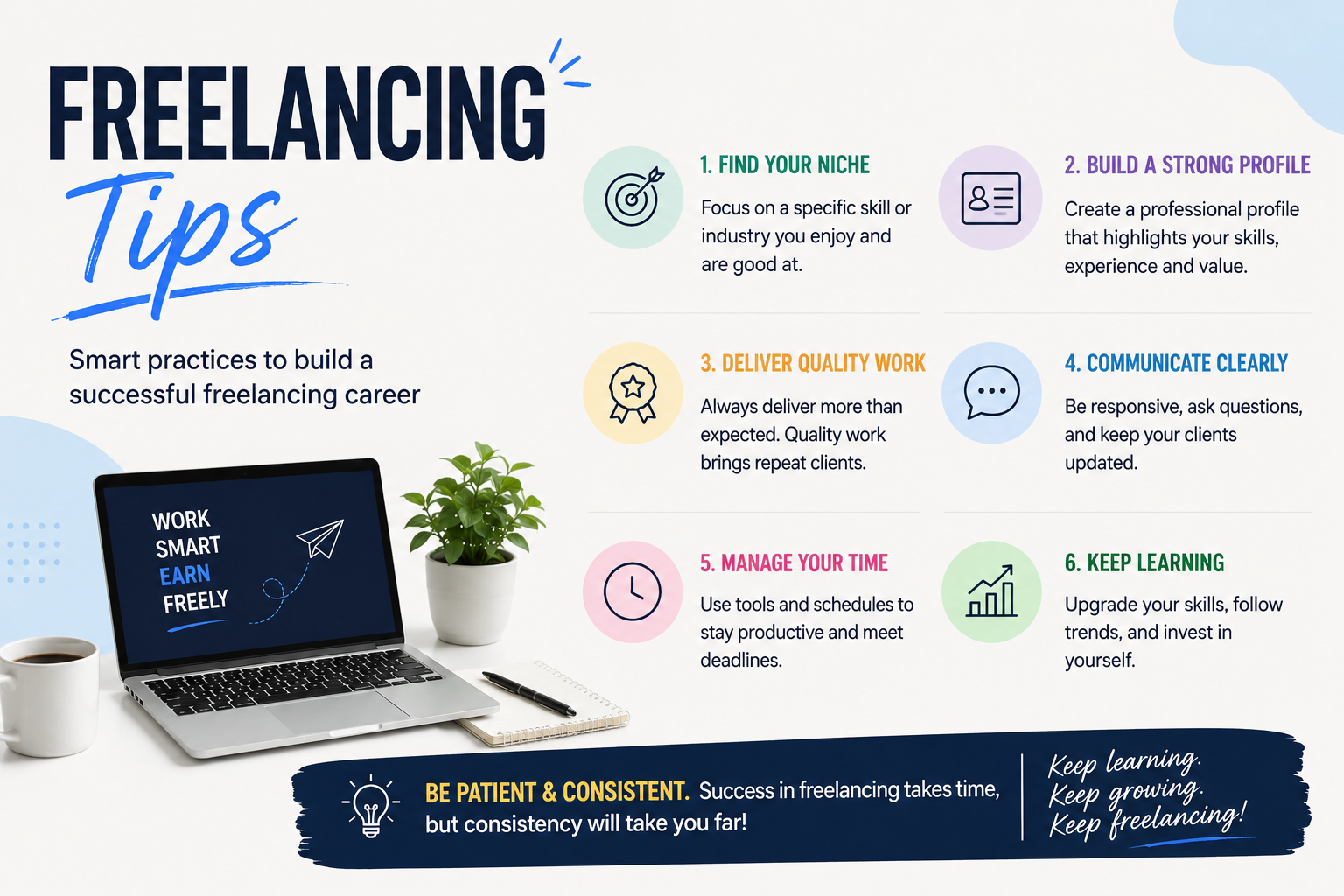
Freelancing has evolved from a side hustle into a global career movement. Millions of professionals now work independently across industries such as writing, design, development, marketing, consulting, video editing, customer support, and virtual assistance. The flexibility is attractive, but success requires more than talent alone. The most effective freelancers understand pricing, communication, positioning, branding, time management, and client retention.
These freelancing tips are designed to help beginners and experienced professionals create stable income, stronger client relationships, and long-term career growth. Whether you are trying to land your first project or scale into a high-income freelance business, the strategies below provide practical insights that reflect modern freelance market realities.
Why Freelancing Continues to Grow Worldwide
The freelance economy keeps expanding because businesses want flexible access to specialized talent without maintaining large full-time teams. Companies now hire independent professionals for short-term projects, ongoing support, technical consulting, creative work, and digital operations. This shift has created more opportunities for freelancers in nearly every niche.
Remote work culture has also normalized independent work arrangements across international markets. Clients are more comfortable hiring skilled professionals from different countries, which means freelancers can access global income opportunities from virtually anywhere with a stable internet connection.
Understanding the Freelance Mindset
One of the most important freelancing tips is recognizing that freelancing is a business, not simply a job. Freelancers are responsible for marketing, communication, sales, project management, finances, and customer service. This mindset shift changes how professionals approach growth and stability.
Successful freelancers think strategically about reputation, systems, and long-term positioning. Instead of focusing only on completing tasks, they build authority in their niche, strengthen relationships, and create repeat business opportunities that reduce financial uncertainty.
Choosing the Right Freelance Niche
Many beginners make the mistake of offering too many unrelated services at once. A focused niche helps clients understand exactly what problem you solve and why they should hire you over competitors. Specialization also increases perceived expertise and often improves pricing potential.
Freelancers who narrow their focus usually attract better-fit projects. For example, a generic writer may struggle with competition, while a SaaS content writer or legal copywriter can position themselves as a specialist with industry-specific knowledge and stronger value.
High-Demand Freelance Skills in Modern Markets
Digital services dominate today’s freelance economy because businesses constantly need online visibility, automation, branding, and content production. Skills like SEO writing, graphic design, paid advertising, social media management, software development, and UX design remain highly competitive.
Emerging technologies are also creating new freelance opportunities. AI workflow consulting, prompt engineering, automation setup, data analysis, and short-form video editing are becoming valuable services as companies adapt to changing digital trends.
Building a Strong Freelance Portfolio
A professional portfolio gives potential clients confidence in your abilities before they contact you. Strong portfolios include relevant work samples, measurable results, client outcomes, and clear explanations of the services provided.
One of the smartest freelancing tips is to prioritize quality over quantity. A smaller collection of impressive projects often performs better than dozens of weak examples. Even beginners can create mock projects or volunteer work samples to demonstrate skill and professionalism.
Creating a Personal Brand That Attracts Clients
Freelancers with recognizable personal brands often generate more inbound leads and referrals. A strong brand communicates expertise, reliability, tone, values, and consistency across websites, social profiles, and portfolios.
Consistency matters because clients evaluate trust quickly. Clear messaging, professional visuals, niche-specific content, and valuable insights help freelancers appear more credible in crowded online marketplaces.
The Importance of Communication Skills
Strong communication separates average freelancers from highly paid professionals. Clients want clarity, responsiveness, confidence, and realistic expectations throughout every stage of a project.
One overlooked freelancing tips strategy is learning how to simplify complex ideas for clients. Professionals who explain timelines, deliverables, revisions, and project outcomes clearly often build longer-lasting client relationships and reduce misunderstandings.
Finding Freelance Clients Effectively
Freelancers can find clients through freelance platforms, social media, networking, referrals, cold outreach, job boards, and content marketing. Each channel works differently depending on industry, pricing level, and experience.
Many experienced freelancers eventually move beyond crowded platforms because direct relationships produce stronger margins and repeat business. Building visibility through LinkedIn, niche communities, email outreach, and educational content can create more sustainable lead generation.
Freelance Platforms and Their Advantages
Freelance marketplaces provide access to large pools of clients looking for immediate help. Platforms can be useful for beginners because they simplify payments, project discovery, and portfolio visibility.
However, competition is intense, and low pricing can become a challenge. The best freelancing tips for platforms include writing tailored proposals, responding quickly, highlighting measurable outcomes, and maintaining excellent client reviews.
Writing Proposals That Win Projects
Clients often receive dozens of generic applications for every freelance opportunity. Personalized proposals stand out because they demonstrate effort, understanding, and professionalism.
Instead of focusing entirely on yourself, discuss the client’s goals, pain points, and desired outcomes. A proposal that addresses business impact directly usually performs better than one filled with vague claims about experience.
Setting Freelance Rates With Confidence
Pricing is one of the biggest challenges for freelancers because many fear losing opportunities by charging too much. Underpricing, however, often leads to burnout, low-quality clients, and unstable income.
One practical freelancing tips approach is calculating rates based on expertise, project complexity, business costs, taxes, revisions, and desired income goals. Freelancers should review pricing regularly as skills and demand increase.
Hourly Pricing Versus Project Pricing
Hourly pricing works well for flexible tasks, consultations, maintenance work, and evolving projects with uncertain scopes. It provides protection when timelines change unexpectedly.
Project pricing often creates higher earning potential because clients focus on outcomes instead of time spent. Experienced freelancers frequently prefer project-based pricing because efficiency becomes financially rewarding.
Understanding Value-Based Pricing
Value-based pricing focuses on the business impact of a service rather than the hours required to complete it. For example, a landing page that increases conversions significantly may justify a much higher fee than its creation time suggests.
Freelancers who understand business metrics often position themselves more effectively. They discuss revenue growth, lead generation, engagement, efficiency, and ROI instead of simply describing deliverables.
Essential Tools for Freelancers
Freelancers rely heavily on productivity and collaboration tools to manage projects efficiently. Communication software, invoicing systems, cloud storage, design tools, project management platforms, and scheduling apps streamline daily operations.
Automation tools can also reduce repetitive administrative work. Many freelancers save hours every week by automating invoicing, follow-ups, file organization, content scheduling, and meeting coordination.
Managing Time as a Freelancer
Time management is critical because freelancers balance client work, marketing, finances, communication, and personal responsibilities simultaneously. Without structure, productivity can decline quickly.
One of the most practical freelancing tips is using time blocks for deep work. Dedicated focus sessions help freelancers avoid constant distractions and complete higher-quality work more efficiently.
Avoiding Freelance Burnout
Burnout is common in freelancing because income pressure encourages overworking. Many freelancers accept too many projects, skip breaks, and struggle to separate personal life from work.
Healthy boundaries improve both creativity and performance. Sustainable freelancers prioritize rest, exercise, realistic deadlines, and selective client management to maintain long-term productivity.
Building Long-Term Client Relationships
Repeat clients are valuable because they reduce time spent on lead generation and create more predictable income. Long-term relationships also improve workflow efficiency because clients already understand the freelancer’s process.
Consistency builds trust over time. Delivering projects on schedule, communicating proactively, and solving problems professionally encourages clients to return for future work.
Client Retention Strategies That Work
Freelancers who retain clients effectively often provide more than the minimum requested service. They identify opportunities, suggest improvements, and think proactively about business outcomes.
Simple gestures can also strengthen loyalty. Regular updates, organized deliverables, and thoughtful follow-up messages create a smoother client experience that encourages referrals and repeat projects.
Dealing With Difficult Clients Professionally
Not every client relationship will be ideal. Some clients communicate poorly, request excessive revisions, or ignore agreed timelines and expectations.
One important freelancing tips principle is documenting everything clearly through contracts, written approvals, and project outlines. Clear systems reduce disputes and provide structure when challenges arise.
Why Contracts Matter in Freelancing
Freelance contracts protect both freelancers and clients by defining payment terms, deadlines, revisions, ownership rights, and project scope. Even small projects benefit from written agreements.
Contracts also establish professionalism and reduce confusion. Clients typically feel more confident working with freelancers who use structured onboarding and clear documentation.
Managing Freelance Finances Responsibly
Financial management is essential because freelance income often fluctuates monthly. Without planning, inconsistent revenue can create stress and instability.
Smart freelancers separate personal and business finances, track expenses carefully, save for taxes, and maintain emergency funds. Financial discipline supports long-term sustainability and reduces pressure during slower periods.
Building Multiple Income Streams
Many freelancers increase stability by diversifying income sources. In addition to client projects, they may sell templates, courses, digital products, memberships, or consulting services.
Diversification reduces dependence on individual clients and creates scalability. Passive or semi-passive income streams can also provide financial flexibility during market changes.
Freelancing Tips for Beginners
Beginners often feel overwhelmed because freelancing involves both creative and business responsibilities. The key is starting with manageable goals while developing systems gradually.
New freelancers should focus on improving one marketable skill, building strong samples, and gaining practical experience. Momentum grows through consistent effort and small wins rather than instant success.
Mistakes New Freelancers Commonly Make
Many beginners undercharge, overpromise, and fail to define project boundaries clearly. Others spend too much time consuming advice without actively building experience.
One of the most valuable freelancing tips for beginners is learning through action. Real projects reveal communication gaps, workflow problems, and pricing lessons much faster than endless research.
The Role of Networking in Freelance Growth
Networking remains one of the strongest growth drivers in freelancing. Relationships often lead to referrals, collaborations, partnerships, and recurring opportunities.
Networking does not always mean attending formal events. Engaging thoughtfully on professional platforms, joining niche communities, and maintaining relationships with past clients can generate meaningful opportunities.
Using LinkedIn to Grow a Freelance Career
LinkedIn has become one of the most effective platforms for professional visibility and lead generation. Freelancers can share expertise, connect with decision-makers, and demonstrate industry knowledge publicly.
Consistent activity helps freelancers stay visible in relevant networks. Educational posts, case studies, insights, and client success stories often attract inbound inquiries over time.
Content Marketing for Freelancers
Content marketing allows freelancers to demonstrate expertise before clients initiate contact. Articles, videos, newsletters, podcasts, and social posts help build authority within a niche.
Freelancers who educate their audience often attract higher-quality leads because potential clients already trust their expertise. Educational content also improves discoverability through search engines and social sharing.
SEO and Visibility for Freelancers
Search engine optimization helps freelancers attract organic traffic from potential clients actively searching for services online. A well-optimized website can generate leads consistently over time.
Strong SEO strategies include targeting relevant keywords, publishing valuable content, improving website speed, and demonstrating topical authority. These freelancing tips help professionals compete more effectively in digital markets.
Creating a Freelance Website That Converts
A freelance website should communicate value quickly through clear messaging, service descriptions, testimonials, and strong calls to action. Visitors should immediately understand what problems the freelancer solves.
Effective websites also prioritize simplicity and usability. Confusing navigation, weak portfolios, and unclear positioning often reduce conversion rates even when the freelancer has strong technical skills.
Productivity Habits of Successful Freelancers
Highly productive freelancers build routines that reduce decision fatigue and improve focus. Structured workflows create consistency even during busy periods.
Morning planning, organized task management, and distraction control help freelancers complete projects more efficiently. Consistent habits usually outperform irregular bursts of motivation.
Balancing Creativity and Business Operations
Freelancers often enjoy creative work but struggle with administrative responsibilities. Ignoring finances, contracts, marketing, or communication can eventually damage business growth.
Sustainable freelance careers require balance between creativity and operational discipline. The most resilient freelancers treat systems and organization as equally important to technical talent.
Freelance Career Growth Stages
Freelance careers often progress through predictable stages, including learning, stabilization, specialization, scaling, and authority building. Each stage requires different priorities and strategies.
Beginners focus on skill development and portfolio building, while experienced freelancers prioritize efficiency, positioning, and higher-value opportunities. Understanding these stages helps professionals make smarter long-term decisions.
Comparison of Common Freelance Pricing Models
| Pricing Model | Best Use Case | Advantages | Challenges |
| Hourly Pricing | Ongoing support and flexible projects | Predictable tracking and scope flexibility | Limits scalability |
| Project Pricing | Defined deliverables and outcomes | Higher earning potential | Requires accurate scoping |
| Retainer Pricing | Long-term recurring work | Stable monthly income | Demands consistent availability |
| Value-Based Pricing | High-impact business outcomes | Maximizes strategic value | Requires strong positioning |
| Package Pricing | Standardized services | Simplifies sales process | Less customization flexibility |
Why Retainers Create Stability
Retainer agreements provide recurring monthly income in exchange for ongoing services or support. Many experienced freelancers prefer retainers because they reduce uncertainty and improve forecasting.
Clients also benefit from long-term partnerships because freelancers become familiar with their systems, goals, and brand voice. This often improves efficiency and communication quality over time.
Scaling Beyond Solo Freelancing
Some freelancers eventually transition into agencies, studios, or small teams. Scaling allows professionals to handle larger projects, expand services, and increase revenue capacity.
Growth requires operational systems and leadership skills in addition to technical expertise. Delegation, quality control, hiring, and workflow management become increasingly important at this stage.
Building Authority in Your Industry
Authority positioning helps freelancers charge premium rates and attract stronger clients. Industry authority is built through consistency, expertise, visibility, and reputation.
Publishing insights, speaking publicly, collaborating with respected professionals, and producing high-quality work all contribute to long-term credibility. Trust compounds over time when freelancers consistently deliver value.
The Impact of AI on Freelancing
Artificial intelligence is reshaping freelance markets by automating repetitive tasks and accelerating workflows. Some freelancers fear replacement, but many are using AI tools to increase productivity and expand service offerings.
Adaptability is now essential. Freelancers who combine strategic thinking, creativity, communication, and AI-assisted efficiency are likely to remain highly competitive in evolving digital industries.
Common Freelance Myths Explained
One common misconception is that freelancing offers unlimited freedom without structure. In reality, successful freelancers maintain disciplined schedules, workflows, and client management systems.
Another myth suggests freelancing provides instant income. Most professionals experience gradual growth that depends on skill development, reputation, and consistent business effort.
Freelancing Tips for Remote Collaboration
Remote collaboration requires strong organization because teams often operate across different time zones and communication styles. Freelancers must maintain clarity and reliability in digital environments.
Shared documents, regular updates, organized workflows, and clear deadlines improve collaboration significantly. Clients value freelancers who reduce friction and simplify project coordination.
Improving Confidence as a Freelancer
Confidence grows through preparation, experience, and measurable results rather than perfection. Many freelancers struggle with impostor syndrome, especially during early career stages.
One effective freelancing tips strategy is documenting achievements and client feedback regularly. Reviewing progress helps freelancers recognize growth and communicate value more confidently.
Learning Continuously in Competitive Markets
Freelance industries evolve rapidly because technology, consumer behavior, and digital platforms constantly change. Professionals who stop learning often struggle to remain competitive.
Continuous education improves adaptability and opens new opportunities. Courses, case studies, industry newsletters, and practical experimentation help freelancers stay relevant and valuable.
The Psychology of Freelance Success
Freelancing involves emotional resilience as much as technical expertise. Rejection, slow periods, difficult clients, and inconsistent workloads can challenge motivation.
Successful freelancers develop patience and persistence over time. They understand that temporary setbacks are normal parts of building a sustainable independent career.
Building Systems for Consistency
Systems reduce chaos by creating repeatable processes for onboarding, communication, invoicing, revisions, and project management. Structured operations improve efficiency and professionalism.
One of the strongest freelancing tips for long-term growth is documenting workflows early. Systems save time, reduce mistakes, and create smoother experiences for both freelancers and clients.
Freelancing Across International Markets
Global freelancing provides access to diverse clients, industries, and income opportunities. Many freelancers now work with businesses across multiple countries and time zones.
International work also requires cultural awareness and communication adaptability. Understanding professional expectations, payment methods, and scheduling differences improves collaboration quality.
Marketing Yourself Without Feeling Salesy
Many freelancers dislike self-promotion because they associate marketing with aggressive selling. Effective marketing, however, is primarily about demonstrating value and solving problems.
Educational content, case studies, and helpful conversations often feel more natural than direct sales tactics. Freelancers who focus on service and expertise usually build stronger trust with potential clients.
The Importance of Testimonials and Reviews
Testimonials provide social proof that reassures potential clients about reliability and quality. Positive feedback can strongly influence purchasing decisions in competitive markets.
Freelancers should request testimonials strategically after successful projects. Detailed reviews that mention outcomes, professionalism, and communication are especially persuasive.
Adapting to Economic Changes
Freelance demand can fluctuate during economic uncertainty, industry disruptions, or market transitions. Adaptability helps freelancers remain resilient during changing conditions.
Diversifying skills, industries, and lead sources reduces vulnerability. Freelancers who monitor market trends closely can adjust services and positioning proactively.
Creating Better Client Experiences
Client experience extends beyond the final deliverable. Communication quality, responsiveness, onboarding, organization, and professionalism all shape how clients perceive freelance services.
Freelancers who create smooth experiences often receive stronger referrals and repeat business. Small operational improvements can significantly increase long-term client satisfaction.
The Value of Patience in Freelancing
Freelance success rarely happens overnight. Most professionals spend years refining skills, building networks, improving systems, and strengthening market positioning.
Patience allows freelancers to focus on sustainable growth instead of short-term desperation. Consistency usually produces stronger long-term outcomes than chasing quick wins.
A Powerful Perspective on Freelance Growth
As author and entrepreneur Seth Godin once said, “Instead of wondering when your next vacation is, maybe you should set up a life you don’t need to escape from.” This quote reflects why many professionals pursue freelancing in the first place.
Freelancing is not only about flexibility or income potential. It is also about creating work aligned with personal goals, strengths, and preferred lifestyles while maintaining meaningful professional independence.
Conclusion
Freelancing offers extraordinary opportunities for professionals willing to combine technical expertise with business strategy, communication, and adaptability. The modern freelance economy rewards specialists who understand value creation, relationship building, and operational consistency.
The most effective freelancing tips focus on long-term sustainability rather than short-term shortcuts. By improving skills, refining systems, building authority, and prioritizing client experience, freelancers can create resilient careers with meaningful financial and professional growth.
FAQ
What are the best freelancing tips for beginners?
The best freelancing tips for beginners include focusing on one valuable skill, building a strong portfolio, learning communication skills, and gaining practical experience through smaller projects.
How can freelancers find high-paying clients?
Freelancers often find higher-paying clients through niche specialization, LinkedIn networking, referrals, SEO content, and strong positioning that emphasizes business outcomes rather than basic deliverables.
Why is personal branding important in freelancing?
Personal branding helps freelancers appear more credible, memorable, and trustworthy. Strong branding can improve visibility, attract better-fit clients, and support premium pricing.
How should freelancers set their rates?
Freelancers should calculate rates based on expertise, project complexity, business expenses, market demand, and income goals rather than copying competitors blindly.
Are freelance platforms worth using?
Freelance platforms can help beginners gain experience and initial clients, but many experienced professionals eventually prioritize direct outreach and referrals for better long-term growth.
What are the biggest mistakes freelancers make?
Common mistakes include underpricing services, failing to use contracts, neglecting marketing, overworking, and accepting poorly defined projects without clear boundaries.
How can freelancers avoid burnout?
Freelancers can avoid burnout by setting realistic schedules, maintaining healthy boundaries, managing workload carefully, and creating systems that improve efficiency.
What skills are most valuable for freelancers today?
High-demand skills include SEO writing, AI consulting, web development, paid advertising, video editing, social media management, graphic design, and data analysis.
You May Also Read: Sadie Sink Parents