

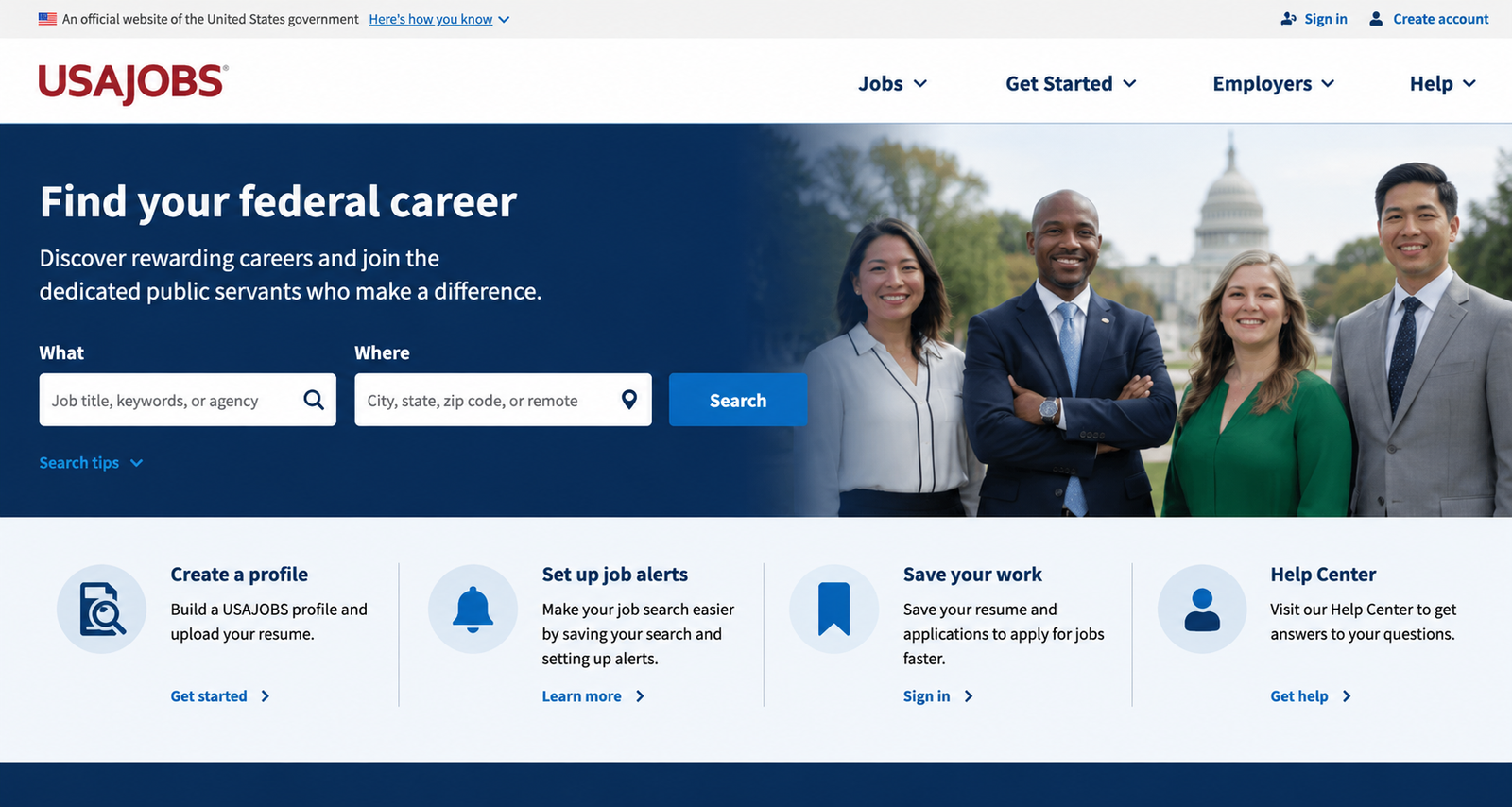
For millions of job seekers, usajobs gov serves as the primary gateway to careers within the United States federal government. Whether you are a recent graduate, military veteran, experienced professional, or someone seeking a stable long-term career, understanding how this platform works can significantly improve your chances of landing a federal position.
Unlike private-sector hiring portals, federal recruitment follows unique rules, qualification standards, and application procedures. Many applicants mistakenly approach government hiring with traditional job-search strategies and become frustrated when they receive no response. Learning the nuances of the federal hiring process can transform your results.
Understanding What USAJOBS Gov Is
usajobs gov is the official federal employment portal used by government agencies to advertise vacancies and manage recruitment. It connects candidates with opportunities across hundreds of federal departments, agencies, and offices throughout the United States and internationally.
The platform acts as a centralized career hub where applicants can search openings, upload documents, create profiles, track applications, and receive notifications about new opportunities. Nearly every major federal employer uses the system as part of its hiring process.
Why Federal Employment Attracts So Many Applicants
Federal jobs offer a combination of stability, competitive benefits, retirement programs, healthcare coverage, and structured career advancement opportunities. These advantages often make government employment appealing during both strong and uncertain economic periods.
Many positions also provide meaningful public-service work that directly impacts communities, national security, healthcare, education, science, transportation, and environmental protection. Employees often find purpose in contributing to missions that extend beyond corporate profit objectives.
How the Federal Hiring System Differs from Private Industry
One of the biggest misconceptions about federal recruitment is assuming it works like private-sector hiring. Government agencies operate under regulations designed to ensure fairness, transparency, and equal opportunity throughout the selection process.
As a result, applications often require more detailed documentation, longer resumes, extensive eligibility verification, and structured qualification assessments. While the process may take longer, it creates a consistent framework for evaluating candidates.
Creating an Effective Profile
A complete profile serves as the foundation of success on usajobs gov. Before applying, candidates should carefully enter employment history, education, certifications, skills, and relevant eligibility information.
Thorough profiles help streamline applications and reduce errors during submission. Many agencies use profile data to verify qualifications, making accuracy and completeness essential from the beginning.
Searching for the Right Opportunities
The search functionality allows users to filter openings by location, agency, pay grade, occupational series, remote work availability, hiring path, and security clearance requirements. Strategic filtering helps applicants focus on roles that genuinely match their qualifications.
Instead of applying to dozens of unrelated positions, successful candidates typically target opportunities aligned with their education, experience, and career goals. A focused approach often yields stronger results than mass applications.
Understanding Job Announcements
Federal job announcements contain far more information than typical corporate job postings. They outline duties, qualification requirements, evaluation criteria, salary ranges, benefits, security requirements, and application instructions.
Reading every section carefully is crucial. Small details regarding specialized experience, required documents, or eligibility categories can determine whether an application advances to the next stage.
Federal Hiring Paths Explained
Many positions are available only to specific applicant groups. Hiring paths help agencies recruit candidates who meet particular eligibility requirements or workforce needs.
Common categories include recent graduates, veterans, current federal employees, military spouses, individuals with disabilities, students, and members of the general public. Understanding these pathways can uncover opportunities that other applicants may overlook.
Building a Federal Resume
Federal resumes differ significantly from traditional one-page private-sector resumes. Agencies often expect detailed information regarding duties, accomplishments, hours worked, supervisor contact information, and employment dates.
A strong federal resume clearly demonstrates how previous experience matches the specialized requirements listed in the vacancy announcement. Specific achievements and measurable outcomes strengthen an applicant’s competitiveness.
Federal Resume vs Traditional Resume
| Feature | Federal Resume | Traditional Resume |
| Length | Often 3–7 pages | Usually 1–2 pages |
| Detail Level | Extensive | Concise |
| Work History | Comprehensive | Selective |
| Hours Worked | Required frequently | Rarely included |
| Supervisor Information | Often requested | Usually omitted |
| Qualification Alignment | Highly specific | Generalized |
| Evaluation Purpose | Compliance and eligibility | Initial screening |
This distinction explains why many qualified applicants struggle initially. A private-sector resume often lacks the detail federal reviewers require.
Understanding Specialized Experience
Specialized experience is among the most important concepts in federal hiring. Agencies evaluate whether applicants have previously performed duties similar to those required by the position.
Candidates should carefully connect their past responsibilities with the specific language used in the vacancy announcement. Demonstrating relevant experience directly improves qualification assessments.
The Importance of Supporting Documents
Many applications require additional documentation beyond a resume. Common examples include transcripts, veteran preference forms, certifications, licenses, performance evaluations, and proof of eligibility.
Missing documents can disqualify an otherwise strong application. Successful applicants review requirements multiple times before submitting materials through usajobs gov.
How Applicant Evaluations Work
After submission, agencies assess qualifications using predefined criteria. Human resources specialists determine whether candidates meet eligibility and minimum qualification standards.
Qualified applicants may then be referred to hiring managers for further review. Referral represents an important milestone but does not guarantee an interview or job offer.
Understanding Federal Pay Grades
Federal compensation commonly follows structured pay systems, particularly the General Schedule (GS). Positions are assigned grades based on responsibility, complexity, and required qualifications.
Higher grades typically correspond with increased experience requirements and broader responsibilities. Understanding grade levels helps applicants target opportunities that match their career stage.
Remote and Hybrid Federal Jobs
Remote work opportunities have expanded across portions of the federal workforce. Some positions allow employees to work entirely from home, while others follow hybrid arrangements.
Job seekers should carefully review location requirements because agencies define remote, telework, and hybrid work differently. These distinctions can affect eligibility and work expectations.
Security Clearances and Background Investigations
Certain federal positions require security clearances or background investigations. These processes help agencies assess trustworthiness and suitability for sensitive responsibilities.
Clearance requirements vary widely depending on agency missions and job functions. Applicants should honestly disclose information throughout the hiring process to avoid complications later.
Strategies for Increasing Selection Chances
Strong candidates tailor each application to the specific vacancy announcement. Generic resumes rarely communicate the targeted experience agencies seek during evaluations.
Carefully incorporating relevant accomplishments, specialized skills, certifications, and measurable achievements can substantially improve competitiveness compared with broad, untargeted submissions.
Common Mistakes Applicants Make
Many applicants submit incomplete applications, ignore required documents, or underestimate the level of detail needed in federal resumes. These mistakes can prevent otherwise qualified candidates from advancing.
Another common issue involves applying for positions without meeting stated qualifications. Focusing on realistic opportunities often produces better outcomes than pursuing every available opening.
Veterans and Federal Employment
Veterans receive important hiring advantages within many federal recruitment programs. Veteran preference policies help recognize military service and facilitate transitions into civilian careers.
These benefits can improve ranking and referral opportunities when properly documented. Veterans should ensure all required records are uploaded and accurately completed.
Opportunities for Students and Recent Graduates
Federal agencies actively recruit emerging talent through internship programs, fellowships, and entry-level career pathways. These programs provide valuable experience while introducing participants to public service careers.
Recent graduates often discover accelerated development opportunities that can lead to long-term federal employment. Early exposure frequently creates strong foundations for future advancement.
Career Growth Within Government
Federal careers often feature structured advancement pathways supported by training, mentoring, and professional development initiatives. Employees can pursue leadership roles, technical specializations, or cross-agency opportunities.
Because government organizations are large and diverse, career mobility frequently exists without requiring employees to leave public service entirely. This flexibility supports long-term career planning.
The Role of Networking in Federal Hiring
Although federal hiring emphasizes formal qualification standards, networking still provides value. Professional relationships can help candidates learn about agency missions, workplace culture, and emerging opportunities.
Informational interviews, professional associations, conferences, and agency outreach events can enhance understanding of specific career fields and strengthen application strategies.
Managing Expectations During the Hiring Process
Federal hiring timelines often exceed those found in private industry. Applications may remain under review for weeks or months depending on agency needs and procedural requirements.
Patience and persistence are important. Candidates should continue applying for suitable opportunities rather than focusing exclusively on a single vacancy.
Trends Shaping Federal Recruitment
Government agencies increasingly seek talent in cybersecurity, artificial intelligence, healthcare, engineering, data analytics, environmental science, and information technology. These fields continue expanding across the federal workforce.
Modernization initiatives are also improving digital recruitment processes. As technology evolves, agencies continue refining how they attract, evaluate, and onboard qualified candidates.
Why Preparation Matters More Than Volume
Some applicants believe success comes from submitting hundreds of applications. In reality, carefully prepared submissions often outperform high-volume approaches that lack customization and strategic focus.
A targeted application demonstrating clear alignment with vacancy requirements gives hiring officials stronger evidence of qualification and suitability for the role.
Expert Perspective on Federal Job Success
A useful principle often shared by experienced federal recruiters is:
“Apply for the job announcement, not just the job title.”
This advice highlights the importance of addressing specific qualifications, competencies, and requirements listed in each posting rather than relying on generalized credentials.
Conclusion
Navigating usajobs gov successfully requires more than simply creating an account and uploading a resume. Federal hiring follows a structured system built around qualifications, documentation, eligibility requirements, and detailed evaluations.
Job seekers who invest time in understanding vacancy announcements, building strong federal resumes, providing complete supporting documents, and targeting appropriate opportunities dramatically improve their chances of success. Whether you are seeking your first government position or advancing an established career, usajobs gov remains the central resource for accessing rewarding federal employment opportunities.
FAQ
What is usajobs gov?
usajobs gov is the official employment website for the United States federal government where agencies post job openings and manage applications.
Is it difficult to get hired through usajobs gov?
The process can be competitive, but applicants who carefully follow requirements and tailor their applications often improve their chances significantly.
How long does the usajobs gov hiring process take?
Hiring timelines vary by agency and position. Some roles may be filled within weeks, while others can take several months.
Do I need a special resume for usajobs gov?
Yes. Federal resumes are generally longer and more detailed than traditional resumes, emphasizing qualifications and specialized experience.
Can recent graduates use usajobs gov?
Absolutely. Many agencies offer internships, fellowships, and entry-level programs specifically designed for students and recent graduates.
Are remote jobs available on usajobs gov?
Yes. Many agencies advertise remote and hybrid opportunities, though requirements differ by position and organization.
Does usajobs gov offer opportunities for veterans?
Yes. Veterans often qualify for hiring preferences and specialized recruitment programs that can improve employment opportunities within federal agencies.
How often should I check usajobs gov?
Checking regularly or setting automated job alerts helps applicants stay informed about new openings that match their interests and qualifications.
You May Also Read: Best Fricase Boliviano Near Me