

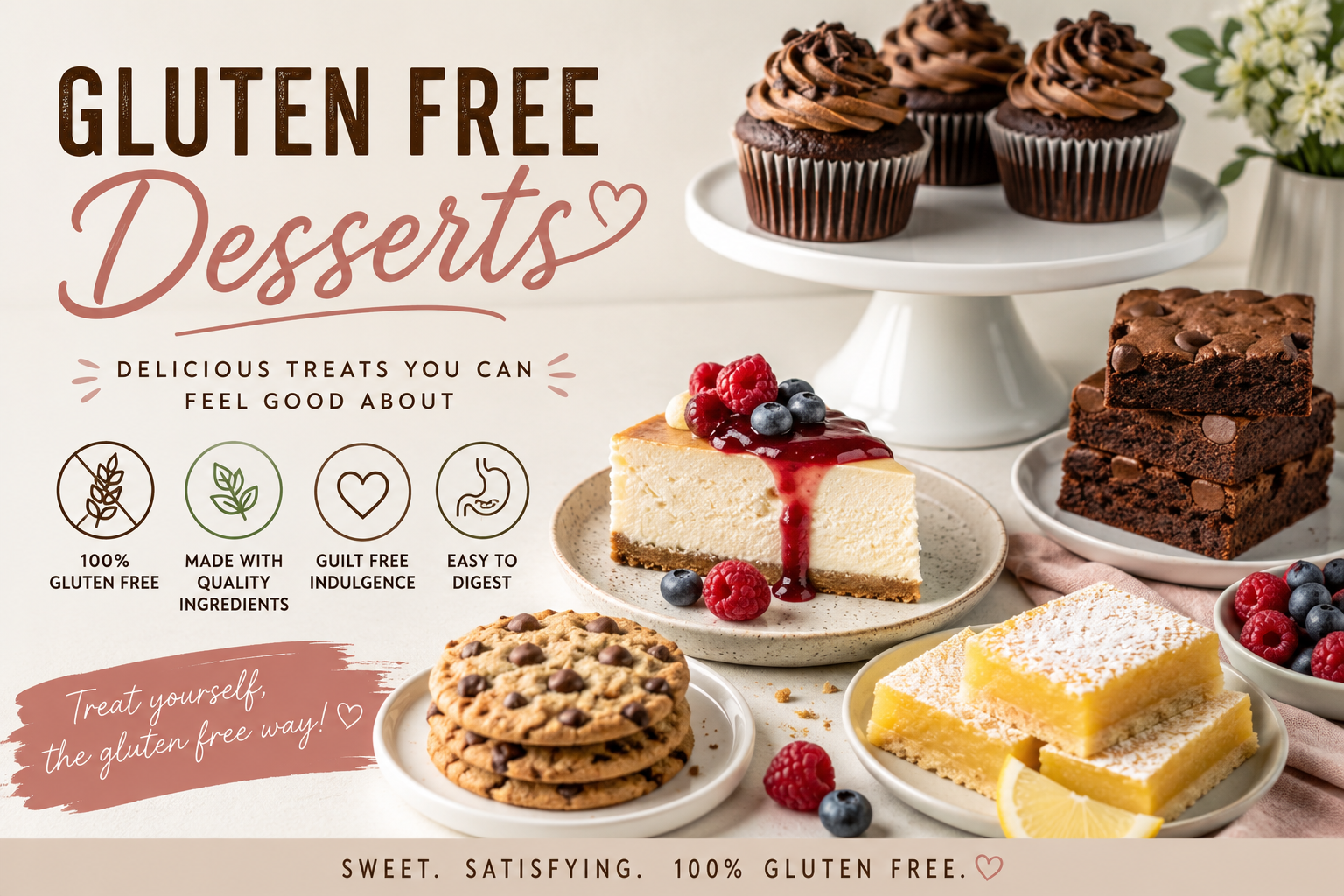
The world of gluten free desserts has evolved dramatically over the last decade. What was once a niche category with limited options has transformed into a thriving culinary space filled with cakes, cookies, brownies, pastries, puddings, and frozen treats that rival their traditional counterparts in flavor and texture.
Whether you’re managing celiac disease, following a gluten-free lifestyle, accommodating dietary restrictions, or simply exploring new baking possibilities, understanding gluten free desserts can help you create memorable treats without sacrificing taste. This comprehensive guide explores ingredients, techniques, trends, and practical strategies for enjoying exceptional desserts while avoiding gluten.
Understanding Gluten Free Desserts
Gluten free desserts are sweet treats made without wheat, barley, rye, or any ingredients derived from these grains. Instead, they rely on alternative flours, starches, nuts, fruits, dairy products, and naturally gluten-free ingredients to achieve desirable textures and flavors.
The growing popularity of gluten-free baking has encouraged innovation among home bakers and professional pastry chefs alike. Today’s recipes often produce results so impressive that many people cannot distinguish them from conventional desserts, demonstrating how far the industry has advanced in recipe development and ingredient technology.
Why People Choose Gluten-Free Sweet Treats
Many individuals choose gluten-free foods because they have celiac disease, non-celiac gluten sensitivity, or wheat allergies. For these individuals, avoiding gluten is a necessary part of maintaining health and well-being rather than simply a dietary preference.
Others are drawn to gluten-free baking because it introduces diverse ingredients such as almond flour, coconut flour, cassava flour, and oat flour. These alternatives often contribute unique flavors, textures, and nutritional benefits that can enhance dessert recipes beyond traditional wheat-based options.
The Science Behind Gluten-Free Baking
Gluten provides elasticity, structure, and chewiness in traditional baked goods. When gluten is removed, bakers must find alternative ways to create stability and maintain moisture throughout the baking process.
Modern recipes often combine multiple gluten-free flours with binding agents such as xanthan gum, psyllium husk, or eggs. These ingredients work together to replicate some of the structural qualities normally supplied by gluten, resulting in desserts that hold their shape while remaining tender and enjoyable.
Essential Ingredients for Success
Successful gluten-free baking begins with selecting high-quality ingredients. Almond flour, rice flour, tapioca starch, potato starch, and coconut flour are among the most commonly used foundations for gluten-free recipes.
Additional ingredients such as chocolate, fresh fruit, dairy products, nuts, seeds, and natural sweeteners play important supporting roles. Many naturally gluten-free ingredients provide excellent texture and flavor, reducing the need for complicated substitutions in certain recipes.
Popular Gluten-Free Flour Options
Different flours perform differently in dessert recipes, making it important to understand their characteristics. Almond flour creates moist, rich baked goods, while rice flour contributes a lighter texture often used in flour blends.
Coconut flour absorbs significant moisture and typically requires additional liquids. Oat flour offers a mild flavor and soft crumb, making it particularly useful for muffins, cookies, and snack cakes when certified gluten-free varieties are used.
Comparing Common Gluten-Free Baking Ingredients
Choosing the right flour can dramatically influence the final result. Understanding strengths and limitations helps bakers select the most appropriate ingredient for each recipe.
| Ingredient | Texture Contribution | Best Uses | Flavor Profile |
| Almond Flour | Moist and tender | Cakes, cookies, brownies | Nutty and rich |
| Rice Flour | Light and crisp | Cookies, pastry blends | Neutral |
| Coconut Flour | Dense and absorbent | Cakes, bars, muffins | Mild coconut |
| Oat Flour | Soft and fluffy | Muffins, cookies, cakes | Mild and wholesome |
| Tapioca Starch | Chewy and elastic | Breads, fillings, blends | Neutral |
| Potato Starch | Light and airy | Cakes and flour blends | Neutral |
| Cassava Flour | Similar to wheat flour | General baking | Mild and versatile |
Cakes That Shine Without Gluten
Cake is one of the most popular categories within gluten free desserts. Chocolate cake, vanilla sponge, carrot cake, lemon cake, and red velvet cake can all be successfully adapted using modern gluten-free techniques.
Moisture management is particularly important when making gluten-free cakes. Ingredients such as yogurt, sour cream, applesauce, and buttermilk often help maintain tenderness while preventing the dryness that was once common in older gluten-free recipes.
Cookies Everyone Will Love
Cookies are often among the easiest desserts to make gluten-free because many recipes naturally rely on butter, sugar, and eggs for structure. Chocolate chip cookies, peanut butter cookies, oatmeal cookies, and shortbread all adapt exceptionally well.
The key to excellent gluten-free cookies often lies in balancing moisture and starch content. Chilling dough before baking can improve texture and reduce spreading, resulting in cookies that look and taste professionally made.
Brownies and Bars as Crowd-Pleasing Favorites
Brownies are frequently cited as some of the most successful gluten free desserts because their dense, fudgy texture requires less structural support than lighter baked goods. Rich chocolate naturally masks subtle differences between gluten-free and traditional recipes.
Dessert bars such as lemon bars, blondies, cheesecake squares, and fruit crumble bars also perform remarkably well. Their versatility makes them ideal for parties, potlucks, and family gatherings where dietary accommodations are needed.
Naturally Gluten-Free Desserts
Some of the best desserts never contained gluten in the first place. Flourless chocolate cake, panna cotta, crème brûlée, meringues, rice pudding, and many frozen desserts fit naturally into a gluten-free lifestyle.
These options demonstrate an important truth: gluten-free eating does not always require substitutions. Sometimes the most elegant solution is choosing desserts built around ingredients that are inherently free from gluten-containing grains.
Fruit-Based Dessert Options
Fruit provides sweetness, moisture, color, and nutritional value, making it a cornerstone of many gluten-free dessert recipes. Fresh berries, apples, peaches, mangoes, and citrus fruits can serve as both primary ingredients and flavorful accents.
Fruit-focused desserts often feel lighter and more refreshing than heavily processed alternatives. Baked fruit crisps, poached pears, grilled peaches, and berry parfaits offer satisfying sweetness while showcasing natural flavors.
Frozen Gluten-Free Treats
Ice cream, sorbet, frozen yogurt, and fruit popsicles can be excellent additions to a gluten-free dessert repertoire. Many frozen treats are naturally gluten-free, though ingredient labels should always be checked for additives or mix-ins.
Homemade frozen desserts provide complete control over ingredients while allowing creativity with flavors and textures. Seasonal fruits, premium chocolate, and natural extracts can transform simple frozen treats into impressive culinary creations.
The Role of Chocolate in Gluten-Free Baking
Chocolate is a beloved ingredient that frequently enhances gluten free desserts. From brownies and cakes to mousses and truffles, chocolate contributes richness and complexity that elevate countless recipes.
High-quality chocolate often serves as a powerful equalizer in gluten-free baking. Its intense flavor and luxurious texture help create desserts that feel indulgent and satisfying regardless of dietary restrictions.
Common Challenges and Solutions
One common challenge involves achieving the correct texture. Without gluten, baked goods may become crumbly, dense, or dry if recipes are not properly balanced.
Fortunately, modern baking techniques offer effective solutions. Combining multiple flour types, incorporating moisture-rich ingredients, and allowing batter to rest before baking can significantly improve consistency and overall quality.
Preventing Cross-Contamination
For individuals with celiac disease, preventing cross-contamination is just as important as selecting gluten-free ingredients. Even trace amounts of gluten can create health concerns and undermine dietary efforts.
Dedicated utensils, clean preparation surfaces, separate storage containers, and careful ingredient verification help ensure that desserts remain truly gluten-free from preparation through serving.
Health Considerations and Nutrition
Not all gluten-free desserts are automatically healthier than conventional desserts. Many still contain sugar, fats, and calories comparable to traditional versions, making portion awareness important.
However, gluten-free recipes can incorporate nutrient-dense ingredients such as nuts, seeds, fruits, and alternative flours. These additions may contribute fiber, healthy fats, vitamins, and minerals while enhancing flavor and texture.
Gluten-Free Desserts for Special Occasions
Birthdays, weddings, holidays, and celebrations often revolve around desserts. Fortunately, gluten-free options now exist for virtually every type of special event, from elaborate layer cakes to elegant plated desserts.
Professional bakers increasingly specialize in gluten-free creations, making it easier than ever to find celebration-worthy treats. Many guests may never realize a dessert is gluten-free unless told explicitly.
Seasonal Dessert Inspiration
Seasonal ingredients create opportunities to keep dessert menus exciting throughout the year. Spring berries, summer peaches, autumn apples, and winter citrus fruits each bring distinctive flavors and textures.
Aligning recipes with seasonal produce often improves taste while supporting freshness and affordability. It also encourages creativity and variety, preventing dessert routines from becoming repetitive.
Trends Shaping the Gluten-Free Dessert Market
Consumer demand continues driving innovation in gluten-free baking. Manufacturers and recipe developers are introducing improved flour blends, specialty ingredients, and convenient ready-to-eat products at a rapid pace.
Plant-based desserts, reduced-sugar options, clean-label ingredients, and globally inspired flavors are among the trends influencing modern gluten-free baking. These developments continue expanding possibilities for consumers and professionals alike.
Expert Perspective on Quality Baking
Exceptional gluten-free baking requires attention to detail rather than shortcuts. The best results emerge when bakers understand ingredient functionality and adapt techniques to suit alternative flour systems.
As renowned baker and educator Rose Levy Beranbaum famously noted, “Baking is both an art and a science.” This principle is especially relevant when crafting gluten-free recipes that balance flavor, structure, and visual appeal.
Building Confidence as a Home Baker
Many beginners approach gluten-free baking with uncertainty, especially after experiencing disappointing results from older recipes. Developing confidence starts with choosing well-tested recipes and understanding the purpose of each ingredient.
Small successes create momentum. Starting with brownies, cookies, or flourless desserts often provides positive experiences that encourage experimentation with more advanced cakes, pastries, and specialty desserts.
Choosing Store-Bought Gluten-Free Desserts
Convenience products have improved substantially in recent years. Grocery stores now offer cookies, cakes, cupcakes, frozen treats, and baking mixes specifically designed for gluten-free consumers.
Reading labels remains essential because formulations vary widely among brands. Evaluating ingredient quality, texture expectations, and certification standards helps consumers make informed purchasing decisions.
The Future of Gluten-Free Desserts
The future of gluten free desserts appears exceptionally promising. Ongoing ingredient innovation, consumer demand, and culinary creativity continue raising quality standards across the industry.
As awareness grows and techniques evolve, the distinction between gluten-free and conventional desserts may become increasingly irrelevant. Great desserts will simply be judged by their flavor, texture, and overall enjoyment rather than their ingredient restrictions.
Conclusion
Gluten free desserts have transformed from limited specialty items into a diverse and exciting category capable of satisfying nearly every sweet craving. Advances in ingredients, baking science, and recipe development have made it possible to create cakes, cookies, brownies, frozen treats, and elegant desserts that rival traditional versions in quality and taste.
Whether you’re baking for medical necessity, personal preference, or culinary exploration, understanding the principles behind gluten-free desserts opens the door to countless delicious possibilities. With the right ingredients, techniques, and mindset, anyone can create memorable desserts that delight family, friends, and guests while remaining completely gluten-free.
FAQ
What are the best gluten free desserts for beginners?
Simple gluten free desserts such as brownies, flourless chocolate cake, peanut butter cookies, and fruit crisps are excellent starting points because they require minimal specialty ingredients and are generally forgiving to prepare.
Are gluten free desserts healthier than regular desserts?
Gluten free desserts are not automatically healthier. Their nutritional value depends on ingredients, portion sizes, and preparation methods, though some recipes may include more nutrient-dense alternatives.
Which flour works best for gluten-free baking?
There is no single best flour for all gluten free desserts. Almond flour, oat flour, rice flour, and blended flour mixes each perform differently depending on the desired texture and recipe type.
Can I make gluten free desserts without special ingredients?
Yes. Many naturally gluten-free desserts such as panna cotta, rice pudding, meringues, and flourless chocolate cake require few or no specialty ingredients while delivering excellent results.
How do I keep gluten-free cakes moist?
Moisture-rich ingredients such as yogurt, sour cream, applesauce, and buttermilk help gluten free desserts retain softness and prevent dryness during baking and storage.
Are oats safe in gluten-free desserts?
Only certified gluten-free oats should be used in gluten free desserts because standard oats may be contaminated with gluten during growing, processing, or packaging.
Why do some gluten-free baked goods crumble?
Crumbly textures often occur when recipes lack adequate binders or moisture. Ingredients such as xanthan gum, psyllium husk, eggs, and starches help improve structure and stability in gluten-free baking.
You May Also Read: brasssmle com