

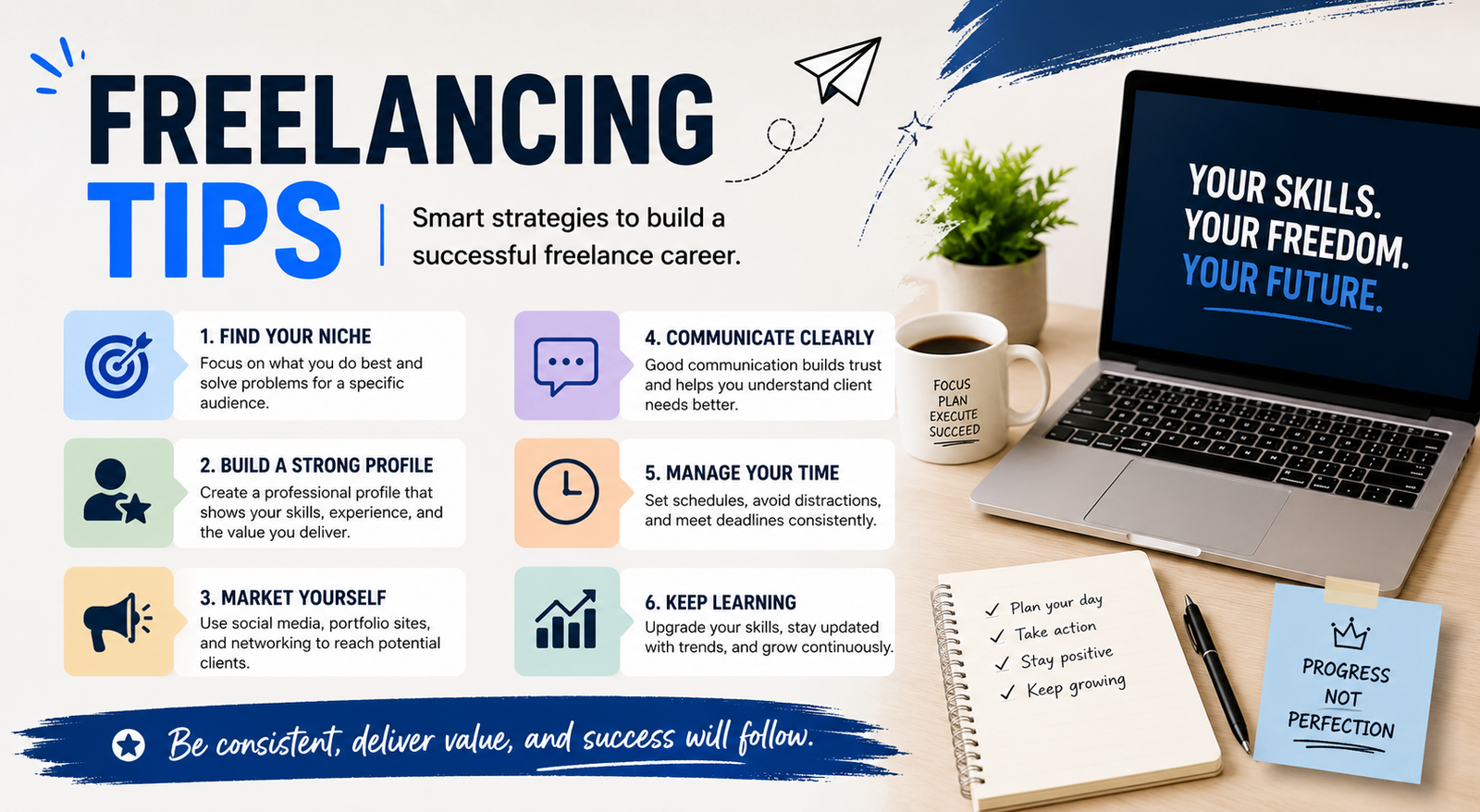
Freelancing has transformed from a side-income opportunity into a global career path for millions of professionals. From writers and designers to developers, consultants, marketers, and virtual assistants, independent work offers flexibility, autonomy, and unlimited growth potential. Yet succeeding in the freelance economy requires much more than technical skills alone.
The difference between struggling freelancers and thriving professionals often comes down to strategy. The most successful independent workers understand how to position their services, attract ideal clients, manage projects efficiently, and continuously improve their business operations. This guide provides practical, proven freelancing tips that help both beginners and experienced freelancers build sustainable careers and increase long-term profitability.
Understanding the Modern Freelancing Landscape
The freelance market has evolved significantly over the past decade as remote work technologies and digital collaboration tools have become standard across industries. Businesses now regularly hire independent professionals for specialized projects, making freelancing more accessible than ever before.
At the same time, increased competition means freelancers must differentiate themselves strategically. Modern clients are looking for expertise, reliability, communication skills, and measurable results. Among the most valuable freelancing tips is recognizing that clients purchase outcomes, not simply hours of work. Understanding this shift can dramatically improve how you market your services and position your expertise.
Choosing the Right Freelance Niche
One of the most important decisions any freelancer makes is selecting a niche. While offering broad services may seem like a way to attract more opportunities, specialization often leads to stronger positioning and higher rates.
Clients frequently prefer specialists because they perceive them as experts capable of solving specific problems efficiently. Whether your focus is content marketing, web development, graphic design, SEO consulting, video editing, or bookkeeping, narrowing your expertise can strengthen your reputation. Effective freelancing tips often emphasize becoming known for one thing before expanding into related services.
Building a Strong Professional Brand
Your personal brand serves as the foundation of your freelance business. It influences how potential clients perceive your professionalism, credibility, and expertise before they ever contact you.
A strong brand includes a professional website, consistent messaging, a compelling portfolio, and a clear value proposition. Instead of simply listing skills, communicate the results you help clients achieve. One of the most practical freelancing tips is to answer a simple question throughout your branding: “Why should a client choose you over other freelancers?”
Creating a Portfolio That Converts
Many freelancers mistakenly treat their portfolios as collections of completed work. In reality, an effective portfolio functions as a sales tool designed to build trust and demonstrate value.
Rather than showcasing every project, highlight examples that align with your target clients. Include context, challenges, solutions, and measurable outcomes whenever possible. Strong case studies help prospects understand your problem-solving abilities. These freelancing tips can significantly improve conversion rates because clients often care more about results than aesthetics alone.
Essential Freelance Skills Beyond Technical Expertise
| Skill Area | Why It Matters | Business Impact |
| Communication | Builds trust and clarity | Higher client retention |
| Time Management | Ensures deadlines are met | Better reputation |
| Negotiation | Protects value and profits | Increased income |
| Marketing | Attracts new clients | Consistent opportunities |
| Financial Management | Improves stability | Sustainable growth |
| Client Relations | Encourages repeat business | Reduced acquisition costs |
| Problem Solving | Delivers better outcomes | Stronger referrals |
| Project Management | Keeps work organized | Increased efficiency |
Technical expertise gets clients interested, but business skills often determine long-term success. Freelancers who master both areas gain a significant competitive advantage.
Developing these complementary skills should be an ongoing priority. Some of the most impactful freelancing tips involve improving communication, organization, and relationship-building abilities because these directly affect client satisfaction and repeat business.
Finding High-Quality Clients
Many freelancers spend too much time chasing low-budget projects while overlooking opportunities with higher-value clients. Strategic client acquisition focuses on quality rather than quantity.
Networking, referrals, content marketing, LinkedIn outreach, freelance marketplaces, and industry communities can all generate leads. However, the best freelancing tips suggest building multiple acquisition channels instead of relying entirely on a single platform. Diversification reduces risk and creates more predictable opportunities.
Writing Proposals That Win Projects
A proposal should address a client’s needs directly rather than functioning as a generic sales pitch. Successful proposals demonstrate understanding, expertise, and a clear path toward achieving desired outcomes.
Focus on the client’s objectives, challenges, and expected results. Explain how your approach solves their specific problem. Many freelancers improve their close rates dramatically by implementing simple freelancing tips such as personalizing every proposal and emphasizing value rather than price.
Setting Rates with Confidence
Pricing remains one of the most challenging aspects of freelancing. Many professionals undervalue their work, particularly during the early stages of their careers.
Your rates should reflect expertise, results, industry demand, and business expenses. Avoid basing pricing solely on competitors. Instead, evaluate the value you create for clients. Among the most profitable freelancing tips is transitioning from hourly pricing toward project-based or value-based pricing whenever appropriate.
Managing Client Expectations Effectively
Clear expectations create smoother projects and stronger professional relationships. Misunderstandings often occur when scope, timelines, deliverables, or communication standards remain undefined.
Detailed contracts, onboarding processes, and project outlines help establish alignment from the beginning. One of the simplest freelancing tips is documenting agreements in writing to minimize confusion and protect both parties throughout the engagement.
Building Long-Term Client Relationships
Acquiring new clients is often more expensive and time-consuming than retaining existing ones. Repeat clients can become the foundation of a stable freelance business.
Consistent communication, reliability, responsiveness, and quality work encourage long-term partnerships. Going beyond expectations occasionally can strengthen relationships further. The best freelancing tips frequently emphasize relationship-building because loyal clients often generate referrals and recurring revenue.
Improving Productivity Without Burnout
Many freelancers mistakenly equate success with working longer hours. Sustainable growth requires efficiency rather than constant overwork.
Time-blocking, task prioritization, automation, and focused work sessions can significantly improve productivity. Equally important is maintaining healthy boundaries and scheduling downtime. Modern freelancing tips increasingly highlight work-life balance because burnout can undermine both performance and income potential.
Managing Freelance Finances Like a Business Owner
Freelancers are not simply service providers; they are business owners. This distinction affects how income, expenses, taxes, savings, and investments should be managed.
Separate business and personal finances whenever possible. Track expenses carefully, maintain emergency savings, and plan for irregular income cycles. Practical freelancing tips often include allocating a percentage of every payment toward taxes and future business investments.
Using Technology to Streamline Operations
Technology can dramatically improve efficiency and reduce administrative burdens. Project management platforms, invoicing software, communication tools, and CRM systems help freelancers operate more professionally.
Automation reduces repetitive tasks and frees more time for billable work. Implementing the right systems is among the most overlooked freelancing tips because many professionals focus exclusively on client delivery while neglecting operational improvements.
Marketing Yourself Consistently
Freelancers often stop marketing once projects arrive. This creates unpredictable cycles of feast and famine that can destabilize income.
Consistent marketing activities help maintain a healthy pipeline of opportunities. Publishing content, sharing insights, networking, collecting testimonials, and nurturing relationships should remain ongoing priorities. Effective freelancing tips encourage dedicating weekly time specifically to business development, regardless of current workload.
Building Authority Through Content
Thought leadership can establish credibility and attract ideal clients. Sharing expertise through blogs, newsletters, podcasts, videos, and social media demonstrates knowledge while expanding visibility.
Educational content also helps prospects understand your value before initial conversations occur. Some of the most successful freelancing tips involve creating content that answers common client questions and addresses industry challenges directly.
Learning to Handle Difficult Clients
Even experienced freelancers occasionally encounter challenging clients. Scope creep, delayed payments, unrealistic expectations, and communication issues can create stress and reduce profitability.
Professional boundaries and clear processes help mitigate many common problems. When issues arise, address them promptly and professionally. Valuable freelancing tips include recognizing red flags during discovery calls and trusting your instincts when evaluating potential projects.
Negotiating Better Contracts
Negotiation is not about confrontation; it is about creating mutually beneficial agreements. Strong contracts clarify responsibilities, timelines, payment schedules, intellectual property rights, and dispute resolution procedures.
Many freelancers avoid negotiation because they fear losing opportunities. In reality, clients often respect professionals who confidently communicate their terms. These freelancing tips help protect your business while reinforcing your professional value.
Scaling Beyond Solo Freelancing
As demand increases, many freelancers reach a capacity limit. Scaling requires strategic decisions about delegation, subcontracting, productization, or agency development.
Not every freelancer wants to build a larger organization, but understanding growth options creates flexibility. Advanced freelancing tips often focus on creating systems that generate more revenue without requiring proportional increases in working hours.
Staying Competitive in a Changing Market
Technology, artificial intelligence, economic shifts, and changing client expectations continuously reshape freelance industries. Adaptability remains a critical success factor.
Continuous learning helps freelancers remain relevant and valuable. Invest in skills development, industry research, certifications, and emerging technologies. The strongest freelancing tips consistently emphasize growth because markets reward professionals who evolve alongside industry trends.
The Mindset Difference Between Amateurs and Professionals
Freelance success is influenced by mindset as much as skill. Professionals approach their work strategically, maintain discipline, and focus on long-term growth rather than short-term convenience.
As author and entrepreneur Seth Godin famously noted: “Instead of wondering when your next vacation is, maybe you should set up a life you don’t need to escape from.” This perspective aligns closely with successful freelancing, where intentional business building creates greater freedom over time.
Creating Sustainable Career Growth
Long-term freelance success rarely happens overnight. Sustainable growth emerges from consistent improvements across marketing, service delivery, client relationships, and business operations.
Rather than chasing shortcuts, focus on building systems that support steady progress. Many enduring freelancing tips center on compounding improvements because small gains, repeated consistently, often produce extraordinary results over time.
Conclusion
Freelancing offers remarkable opportunities for independence, flexibility, and financial growth, but success requires far more than talent alone. Building a thriving freelance business involves strategic positioning, effective marketing, strong client relationships, disciplined financial management, and continuous learning.
The most valuable freelancing tips are often the simplest: specialize thoughtfully, communicate clearly, deliver exceptional value, and treat your freelance work as a business rather than a series of individual projects. By consistently applying these principles, freelancers can create sustainable careers that generate both professional fulfillment and long-term financial success.
FAQ
What are the most important freelancing tips for beginners?
New freelancers should focus on building a niche, creating a strong portfolio, improving communication skills, and developing consistent client acquisition systems. These foundational freelancing tips help establish credibility and generate early opportunities.
How can freelancers find high-paying clients?
High-paying clients are often found through referrals, professional networking, content marketing, LinkedIn outreach, and industry-specific communities. Applying strategic freelancing tips can help attract clients who value expertise over low pricing.
Should freelancers charge hourly or per project?
Project-based pricing is often more profitable because it focuses on outcomes rather than time spent. Many freelancing tips recommend transitioning toward value-based pricing as experience and expertise increase.
How do freelancers avoid burnout?
Freelancers can reduce burnout by setting boundaries, managing workloads carefully, taking breaks, and maintaining realistic schedules. Modern freelancing tips emphasize sustainability rather than constant hustle.
Why is specialization important in freelancing?
Specialization helps freelancers stand out in competitive markets and position themselves as experts. Effective freelancing tips frequently encourage focusing on a niche to improve visibility and command higher rates.
How can freelancers increase repeat business?
Consistent communication, quality work, reliability, and proactive problem-solving encourage clients to return. Many freelancing tips highlight client retention as one of the fastest ways to increase revenue.
What tools are most useful for freelancers?
Project management software, invoicing tools, communication platforms, CRM systems, and time-tracking applications can improve efficiency. These freelancing tips help freelancers spend less time on administration and more time delivering value.
You May Also Read: Cooking With Kya