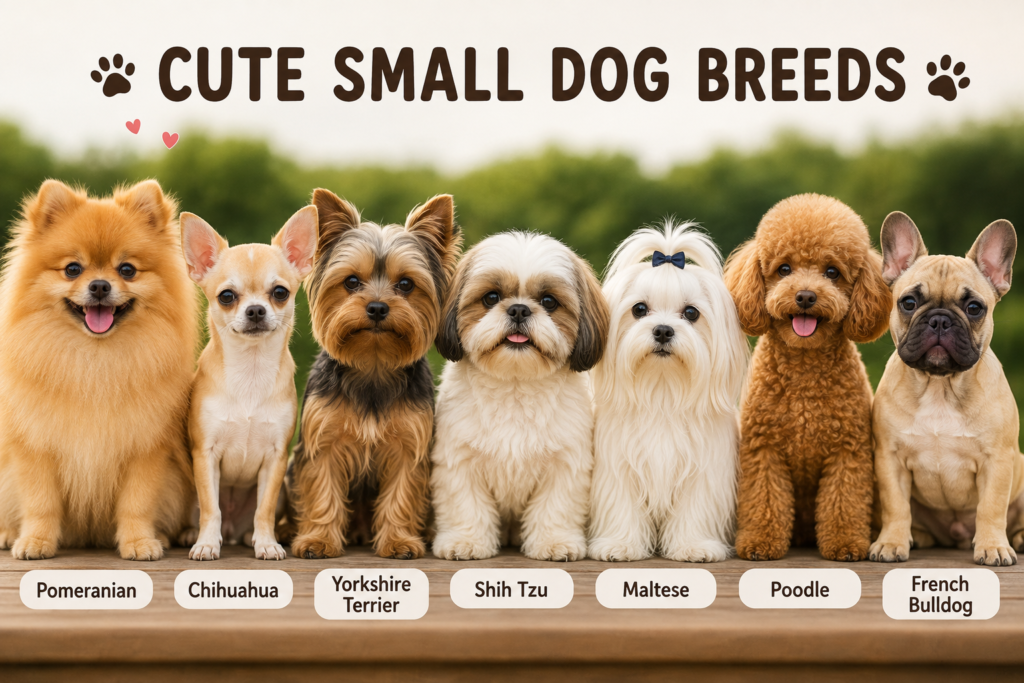
Small dogs have won the hearts of pet lovers around the world. Their adorable appearance, affectionate personalities, and ability to adapt to different lifestyles make them an excellent choice for families, singles, seniors, and apartment dwellers. While their size may be small, many of these breeds have energetic, loyal, and playful personalities that make them wonderful lifelong companions.
Whether you’re looking for a cuddly lap dog, an active walking partner, or a friendly family pet, there’s a breed that fits your lifestyle. This guide explores some of the Cute Small Dog Breeds, compares their characteristics, and offers practical advice on grooming, exercise, and choosing the right dog. You’ll also discover helpful tips for first-time owners and learn what to expect before bringing home your new furry friend.
Why Small Dog Breeds Are So Popular
Cute Small Dog Breeds continue to rank among the most popular pets for several reasons. Their compact size makes them easier to manage, especially for people living in apartments or smaller homes. Many also require less food than larger breeds, making them more affordable to care for over time.
Beyond convenience, these dogs are known for their loving personalities. Many enjoy spending time with their owners, thrive on companionship, and adapt well to indoor living. Some are energetic and playful, while others prefer relaxing on the couch, giving prospective owners plenty of options based on their lifestyle.
Another reason people love small dogs is their portability. Whether you’re visiting family, traveling, or taking a walk around the neighborhood, carrying or transporting a small dog is generally much easier than managing a large breed.
Quick Comparison of Cute Small Dog Breeds
| Breed | Weight | Lifespan | Grooming | Apartment Friendly | Family Friendly | Energy Level |
| Pomeranian | 3–7 lbs | 12–16 years | High | Excellent | Good | High |
| Maltese | 4–7 lbs | 12–15 years | Moderate | Excellent | Excellent | Moderate |
| Yorkshire Terrier | 4–7 lbs | 11–15 years | High | Excellent | Good | High |
| Shih Tzu | 9–16 lbs | 10–16 years | High | Excellent | Excellent | Moderate |
| Chihuahua | 2–6 lbs | 14–17 years | Low | Excellent | Fair | Moderate |
| Toy Poodle | 4–6 lbs | 12–18 years | Moderate | Excellent | Excellent | High |
| Bichon Frise | 12–18 lbs | 14–15 years | Moderate | Excellent | Excellent | Moderate |
| Cavalier King Charles Spaniel | 13–18 lbs | 12–15 years | Moderate | Excellent | Excellent | Moderate |
Top Cute Small Dog Breeds
1. Pomeranian
The Pomeranian is one of the most recognizable toy breeds thanks to its fluffy double coat and fox-like face. These dogs are confident, intelligent, and full of energy despite their tiny size.
They enjoy learning tricks, playing games, and spending time with their owners. Regular brushing is essential to keep their thick coat looking its best.
Best for: Active owners, apartment living, experienced and first-time dog owners.
2. Maltese
The Maltese is famous for its silky white coat and gentle temperament. This breed loves attention and forms strong bonds with its family.
Although their long coat requires regular grooming, many owners opt for a shorter puppy cut for easier maintenance. Maltese dogs are affectionate and thrive in calm households.
Best for: Families, seniors, and apartment living.
3. Yorkshire Terrier
Yorkies may be tiny, but they have fearless personalities. Originally bred to catch rats in textile mills, they remain alert, brave, and energetic today.
Their beautiful, fine coat requires regular brushing, and they benefit from early socialization and training to reduce excessive barking.
Best for: Singles, couples, and city living.
4. Shih Tzu
Originally bred as royal companion dogs, Shih Tzus are affectionate, friendly, and adaptable. They enjoy relaxing indoors but also appreciate short daily walks.
Their luxurious coat needs frequent brushing unless kept trimmed. Their calm nature makes them one of the best cute small dog breeds for families with children who know how to interact gently with pets.
Best for: Families, seniors, and apartment owners.
5. Chihuahua
The Chihuahua is among the Cute Small Dog Breeds that packs an incredible amount of personality into a tiny frame. They are loyal, protective, and often develop a close bond with one favorite person.
Despite their size, they enjoy regular playtime and mental stimulation. Cold weather can be challenging for them, so many owners use sweaters during winter walks.
Best for: Singles, experienced owners, and small homes.
6. Toy Poodle
Toy Poodles combine intelligence with elegance. They are quick learners and consistently rank among the easiest breeds to train.
Their curly coat sheds very little, making them a popular choice for people looking for lower-shedding companions. Regular grooming keeps their coat healthy and tangle-free.
Best for: Families, allergy-conscious owners, and first-time pet parents.
7. Bichon Frise
Known for its cheerful personality and cotton-like coat, the Bichon Frise is a playful companion that gets along well with children and other pets.
They love human interaction and generally adapt well to apartment life as long as they receive regular exercise and mental stimulation.
Best for: Families, retirees, and apartment dwellers.
8. Cavalier King Charles Spaniel
Gentle, affectionate, and eager to please, the Cavalier King Charles Spaniel is often recommended for households seeking a calm and loving companion.
They enjoy both playtime and quiet evenings on the couch, making them one of the most versatile small breeds.
Best for: Families, seniors, and first-time owners.
9. Papillon
The Papillon stands out because of its butterfly-shaped ears and lively personality. These dogs are athletic, intelligent, and excel in agility competitions.
Although small, they require regular mental challenges and daily exercise to stay happy.
Best for: Active families and owners who enjoy training.
10. Miniature Dachshund
With its long body and short legs, the Miniature Dachshund has a unique appearance that’s impossible to overlook.
Curious and brave, they enjoy exploring their surroundings but should avoid excessive jumping to protect their backs.
Best for: Families and individuals looking for a loyal companion.
11. Havanese
The Havanese is Cuba’s national dog and is loved for its silky coat and friendly nature. These dogs are outgoing, social, and eager to participate in family activities.
Their adaptable personality makes them suitable for apartments and larger homes alike.
Best for: Families with children and first-time owners.
12. Boston Terrier
Often called the “American Gentleman” because of its tuxedo-like markings, the Boston Terrier is intelligent, playful, and affectionate.
Their short coat requires minimal grooming, making them one of the lower-maintenance options among small breeds.
Best for: Busy owners and apartment living.
Best Cute Small Dog Breeds by Lifestyle
Best for Families
Families often benefit from breeds that are patient, affectionate, and playful. Some of the best choices include:
- Shih Tzu
- Cavalier King Charles Spaniel
- Bichon Frise
- Havanese
- Toy Poodle
These breeds generally enjoy spending time with children and adapt well to family routines when properly socialized.
Best for Apartment Living
Limited space doesn’t mean you can’t own a dog. These breeds thrive in apartments with regular walks and playtime:
- Maltese
- Chihuahua
- Yorkshire Terrier
- Pomeranian
- Boston Terrier
Best for First-Time Owners
If you’re new to dog ownership, look for breeds known for their friendly personalities and trainability:
- Toy Poodle
- Cavalier King Charles Spaniel
- Havanese
- Bichon Frise
- Shih Tzu
Many of these also appear on lists featuring the Top 10 Cute Small Dog Breeds because of their balanced temperament and ease of care.
Grooming Tips for Cute Small Dog Breeds
Grooming requirements vary significantly between breeds. Long-haired dogs such as the Maltese, Yorkshire Terrier, and Shih Tzu need brushing several times a week to prevent tangles and mats.
Short-coated breeds like the Boston Terrier and Chihuahua require much less maintenance but still benefit from regular brushing to remove loose hair and keep their coat healthy.
Regardless of breed, every dog should receive:
- Regular nail trimming
- Ear cleaning
- Teeth brushing several times each week
- Routine bathing using dog-friendly shampoo
- Professional grooming when needed
Dental care deserves special attention because many small breeds are prone to dental disease. Daily brushing and annual veterinary dental checkups can help prevent serious oral health issues.
Exercise and Mental Stimulation
Although they are small, these dogs still need regular exercise. Daily walks, interactive toys, and training sessions help prevent boredom and destructive behaviors.
Here’s a quick guide:
| Breed | Daily Exercise | Indoor Play | Training Difficulty |
| Pomeranian | 45–60 min | Excellent | Easy |
| Toy Poodle | 45–60 min | Excellent | Very Easy |
| Shih Tzu | 30–45 min | Good | Easy |
| Chihuahua | 20–30 min | Excellent | Moderate |
| Boston Terrier | 30–45 min | Good | Easy |
Mental stimulation is equally important. Puzzle toys, obedience training, scent games, and interactive play strengthen the bond between you and your dog while keeping their minds active.
13. Pug
Pugs are charming little dogs with wrinkled faces and expressive eyes. They are affectionate, playful, and happiest when spending time with their families. Although they enjoy short walks and games, they are not overly energetic.
Because of their flat faces, Pugs can struggle in hot weather, so owners should avoid strenuous exercise during warm days.
Best for: Families, apartment living, and first-time owners.
14. Brussels Griffon
The Brussels Griffon has a distinctive face and a lively personality. These dogs are intelligent, curious, and love being the center of attention. They form close bonds with their owners and enjoy interactive games.
Best for: Singles, couples, and experienced dog owners.
15. Japanese Chin
Elegant and graceful, the Japanese Chin is known for its cat-like behavior. It enjoys climbing furniture, observing its surroundings, and relaxing beside its owner.
This breed is calm, affectionate, and adapts well to apartment living.
Best for: Seniors and quieter households.
16. Coton de Tulear
With its soft cotton-like coat, the Coton de Tulear is one of the friendliest companion dogs. It loves children, gets along with other pets, and enjoys learning new tricks.
Regular brushing keeps its fluffy coat healthy and free from tangles.
Best for: Families and first-time owners.
17. Affenpinscher
Often called the “Monkey Dog” because of its facial expression, the Affenpinscher is confident, entertaining, and fearless despite its small size.
It enjoys moderate exercise and responds well to positive training methods.
Best for: Active owners and smaller households.
18. Miniature Pinscher
The Miniature Pinscher is energetic, alert, and highly confident. Sometimes called the “King of Toys,” this breed enjoys exploring and needs daily physical and mental stimulation.
Best for: Active families and experienced owners.
19. Italian Greyhound
Elegant and athletic, the Italian Greyhound enjoys sprinting during play but is equally happy curling up under a blanket afterward.
Its short coat is easy to maintain, although it needs protection in colder weather.
Best for: Apartment living and quiet homes.
20. Pekingese
Originally bred for Chinese royalty, the Pekingese is dignified, loyal, and affectionate. Its luxurious coat requires regular brushing, but its calm temperament makes grooming worthwhile.
Best for: Seniors and relaxed households.
Choosing the Right Small Dog for Your Lifestyle
Every breed has unique characteristics, so choosing the right companion requires more than simply picking the cutest puppy.
Ask yourself:
- Do you live in an apartment or a house?
- How much daily exercise can you provide?
- Are you willing to groom a long-haired dog?
- Do you have young children?
- Do you travel frequently?
- Will your dog spend long hours alone?
Answering these questions honestly will help you select a breed that matches your daily routine and expectations.
Common Health Issues in Cute Small Dog Breeds
Although many small breeds live long, healthy lives, they are more likely to experience certain health conditions.
Common concerns include:
- Dental disease
- Luxating patella (kneecap problems)
- Tracheal collapse
- Heart disease
- Eye disorders
- Obesity
- Joint issues
Routine veterinary checkups, quality nutrition, regular exercise, and preventative care significantly reduce many health risks.
How Much Does It Cost to Own a Small Dog?
Owning a dog is a long-term financial commitment. While small breeds usually eat less than large dogs, they still require quality care.
| Expense | Estimated Annual Cost |
| Food | $250–$600 |
| Routine Vet Care | $200–$500 |
| Grooming | $250–$900 |
| Toys & Accessories | $100–$300 |
| Pet Insurance | $250–$700 |
| Training | $100–$500 |
The exact amount depends on the breed, grooming requirements, healthcare needs, and your location.
Adoption vs. Buying
If you’re looking for cute small dog breeds for sale, take time to research reputable breeders who prioritize health testing, responsible breeding practices, and proper puppy socialization.
Adoption is another excellent option. Many shelters and rescue organizations have wonderful small dogs waiting for loving homes. Adoption not only saves a life but is often more affordable than purchasing a puppy.
When buying from a breeder:
- Visit the breeding facility if possible.
- Ask for health clearances.
- Meet the puppy’s parents.
- Avoid breeders who always have puppies available or refuse to answer questions.
Essential Supplies for Your New Puppy
Before bringing your new companion home, prepare the following essentials:
- Comfortable dog bed
- Food and water bowls
- High-quality puppy food
- Harness and leash
- Crate
- Identification tag
- Grooming brush
- Nail clippers
- Dog-safe toys
- Puppy training pads
- Dental care products
Having these items ready helps your puppy settle into its new environment more comfortably.
Mistakes First-Time Owners Should Avoid
Many new owners unintentionally create challenges by making avoidable mistakes.
Some common ones include:
- Choosing a breed based only on appearance.
- Ignoring grooming requirements.
- Skipping obedience training.
- Overfeeding treats.
- Neglecting dental care.
- Failing to socialize puppies early.
- Buying from irresponsible breeders.
Proper preparation and consistent training create happier, healthier dogs.
Expert Tips for Choosing the Perfect Small Dog
Experienced owners and veterinarians often recommend focusing on temperament rather than appearance.
Keep these practical tips in mind:
- Match the dog’s energy level to your lifestyle.
- Research common breed-specific health conditions.
- Budget for lifelong veterinary care.
- Invest time in training and socialization.
- Adopt responsibly or choose ethical breeders.
- Remember that every dog has an individual personality, even within the same breed.
If you’re comparing Cute medium dog breeds with smaller companions, consider your available space, activity level, and grooming preferences. Medium-sized dogs often require more exercise, while many smaller breeds adapt more easily to apartment living.
Whether you’re exploring a List Cute Small Dog Breeds, searching for the Top 10 Cute Small Dog Breeds, or browsing the Cute Small Dog Breeds with pictures, remember that the “best” breed depends on your lifestyle rather than popularity alone. Families often prefer breeds featured among the Top 10 Cute Small Dog Breeds for families, thanks to their affectionate personalities, patience, and adaptability.
Conclusion
Cute small dog breeds offer companionship, loyalty, and endless joy in surprisingly compact packages. From the playful Pomeranian and intelligent Toy Poodle to the affectionate Cavalier King Charles Spaniel and gentle Shih Tzu, there’s a breed to suit nearly every lifestyle.
Before bringing home a puppy or adopting an adult dog, take time to evaluate your schedule, living space, grooming commitment, and budget. Choosing a breed that matches your lifestyle will lead to a happier relationship for both you and your furry friend. With proper care, regular veterinary visits, balanced nutrition, and plenty of love, your small dog can become a cherished member of your family for many years.
Frequently Asked Questions
1. What is the cutest small dog breed?
There isn’t one definitive answer, but Pomeranians, Maltese, Shih Tzus, Cavalier King Charles Spaniels, and Toy Poodles are consistently ranked among the Cute Small Dog Breeds because of their adorable appearance and affectionate personalities.
2. Which small dog breed is best for families?
Shih Tzus, Bichon Frises, Havanese, Toy Poodles, and Cavalier King Charles Spaniels are excellent choices for families because they are friendly, gentle, and enjoy spending time with children.
3. Which small dog sheds the least?
Toy Poodles, Maltese, and Bichon Frises are among the lowest-shedding small breeds. While no dog is completely hypoallergenic, these breeds are often preferred by allergy-conscious owners.
4. Are small dogs good for apartment living?
Yes. Many small breeds, including Chihuahuas, Maltese, Boston Terriers, and Yorkshire Terriers, thrive in apartments when provided with regular walks, playtime, and mental stimulation.
5. How much exercise do small dogs need?
Most small breeds need between 20 and 60 minutes of daily exercise, depending on their energy level, age, and overall health.
6. Should I adopt or buy a small dog?
Both options can be excellent. Adoption gives a deserving dog a second chance, while purchasing from a responsible breeder may be appropriate if you’re seeking a specific breed with documented health history. Always avoid puppy mills and unethical breeders.
You May Also Read: best iptv services