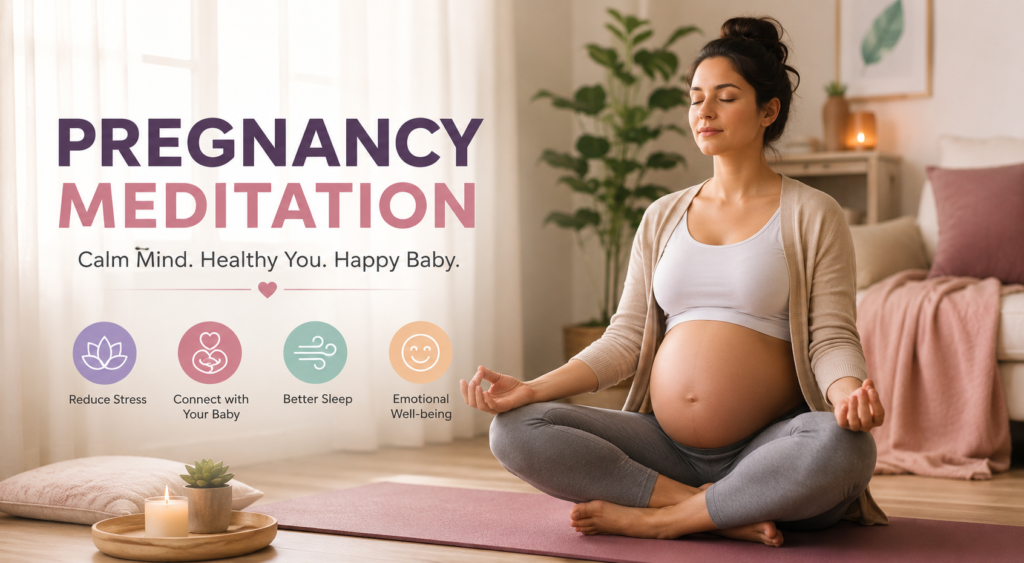
Pregnancy is an exciting journey, but it also comes with physical changes, emotional ups and downs, and moments of uncertainty. Whether you’re worrying about your baby’s health, preparing for labor, or simply trying to sleep better, taking care of your mental well-being is just as important as looking after your physical health. That’s where pregnancy meditation can make a meaningful difference.
Meditation during pregnancy is a gentle practice that helps calm the mind, reduce stress, and improve emotional balance. It doesn’t require any special equipment or prior experience. Even spending five to ten minutes a day focusing on your breath or following a guided meditation can help you feel more grounded and connected with your growing baby.
In this guide, you’ll learn what pregnancy meditation is, its benefits, safe techniques for every trimester, practical routines, breathing exercises, and tips to build a lasting habit. Whether you’re a beginner or already familiar with mindfulness, this article will help you create a calming practice that supports both you and your baby.
What Is Pregnancy Meditation?
Pregnancy meditation is the practice of using mindfulness, breathing techniques, visualization, or guided relaxation specifically designed for expectant parents. Its purpose is to reduce stress, encourage emotional well-being, and create a peaceful environment during pregnancy.
Unlike traditional meditation, prenatal meditation often focuses on the unique emotional and physical experiences of pregnancy. Sessions may include positive affirmations, breathing exercises, body awareness, or visualizations that prepare you for labor while strengthening your emotional connection with your baby.
The best part is that you don’t need years of meditation experience. Beginners can start with just a few minutes daily and gradually increase the duration as they become more comfortable.
Is Pregnancy Meditation Safe?
For most healthy pregnancies, meditation is considered a safe and beneficial practice. Since it doesn’t involve medication or intense physical activity, it’s a low-risk way to support emotional health.
However, if you have a high-risk pregnancy, severe anxiety, or other medical concerns, it’s always wise to speak with your healthcare provider before starting any new wellness routine. Meditation is designed to complement medical care—not replace professional advice or treatment.
Safe Meditation Positions by Trimester
| Pregnancy Stage | Recommended Position | Tips |
| First Trimester | Sitting comfortably or lying down | Choose whatever feels most relaxing. |
| Second Trimester | Supported sitting or side-lying | Use cushions to support your back and hips. |
| Third Trimester | Left-side lying or upright sitting | Avoid lying flat on your back for extended periods if advised by your healthcare provider. |
Benefits of Pregnancy Meditation
Regular meditation offers several mental and physical benefits throughout pregnancy.
Reduces Stress and Anxiety
Pregnancy naturally brings new worries, from prenatal appointments to labor preparation. Meditation helps activate the body’s relaxation response, making it easier to manage anxious thoughts and daily stress.
Improves Sleep Quality
Many expectant parents struggle with restless nights, especially later in pregnancy. A short pregnancy meditation sleep routine before bed can calm racing thoughts and encourage deeper relaxation.
Encourages Emotional Balance
Hormonal changes can affect mood throughout pregnancy. Meditation helps increase mindfulness, making it easier to respond calmly to emotional ups and downs.
Strengthens the Parent-Baby Connection
Many guided sessions encourage gentle visualization and positive affirmations, supporting a deeper emotional bond with your unborn baby. A pregnancy meditation to connect with baby often focuses on gratitude, breathing, and mindful awareness of your baby’s movements.
Supports Labor Preparation
Meditation can teach breathing and visualization techniques that may help you stay focused and calm during labor. While it isn’t a replacement for medical pain management, it can become a valuable coping tool.
How Pregnancy Meditation Works
When you experience stress, your body releases hormones such as cortisol and adrenaline. Although occasional stress is normal, ongoing stress may leave you feeling physically and emotionally drained.
Meditation helps shift your body into a calmer state by slowing your breathing, relaxing your muscles, and encouraging present-moment awareness. Over time, many people notice improved emotional resilience, better concentration, and a greater sense of peace.
Rather than trying to “empty your mind,” meditation teaches you to notice thoughts without becoming overwhelmed by them.
Pregnancy Meditation by Trimester
Every stage of pregnancy brings unique challenges. Tailoring your meditation practice to each trimester can make it even more helpful.
Pregnancy Meditation First Trimester
The pregnancy meditation first trimester period often involves fatigue, morning sickness, and emotional adjustment. Short breathing exercises, body awareness, and self-compassion meditations can help you manage uncertainty while building a consistent habit.
Aim for five to ten minutes each morning, focusing on slow breathing and gentle relaxation.
Second Trimester Meditation
Many people experience increased energy during the second trimester. This is an excellent time to deepen your practice by exploring mindfulness meditation, gratitude exercises, and guided visualizations.
You may also begin using a pregnancy meditation script to develop a calming daily routine.
Pregnancy Meditation Third Trimester
The pregnancy meditation third trimester stage often brings physical discomfort, sleep challenges, and anticipation of labor.
Body scan meditation, visualization, and longer relaxation sessions can help reduce tension while preparing mentally for childbirth. Gentle breathing techniques may also improve relaxation before bedtime.
Types of Pregnancy Meditation
Different meditation styles offer different benefits.
| Meditation Type | Best For | Ideal Stage |
| Mindfulness Meditation | Daily stress | All trimesters |
| Guided Meditation | Beginners | All trimesters |
| Body Scan Meditation | Sleep and relaxation | Second and third trimester |
| Visualization | Labor preparation | Third trimester |
| Loving-Kindness Meditation | Emotional well-being | All trimesters |
| Breath Awareness | Anxiety relief | All trimesters |
Experiment with different approaches until you find one that feels natural.
A Simple Pregnancy Meditation Routine
If you’re new to meditation, start with this beginner-friendly routine.
Step 1: Find a Quiet Space
Choose a comfortable location where you won’t be interrupted for a few minutes.
Step 2: Sit Comfortably
Sit in a supportive chair or on cushions. Later in pregnancy, lying on your side may feel more comfortable.
Step 3: Focus on Your Breathing
Take slow, gentle breaths. Inhale through your nose and exhale slowly through your mouth.
Step 4: Observe Your Thoughts
Instead of trying to stop your thoughts, simply notice them and gently return your attention to your breathing.
Step 5: Connect with Your Baby
Imagine your baby surrounded by warmth and love. You can silently repeat positive affirmations such as:
- My baby is safe.
- My body is strong.
- I welcome each new day with calm.
Step 6: End with Gratitude
Finish your session by expressing gratitude for yourself, your body, and your growing baby.
Example Pregnancy Meditation Script
Here’s a simple pregnancy meditation script you can practice anytime:
Close your eyes and take a slow, deep breath. Feel your shoulders relax as you exhale. Place your hands gently on your belly and notice your baby’s presence. Imagine each breath surrounding your baby with warmth, love, and safety. Repeat quietly, “We are calm. We are healthy. We are growing together.” Continue breathing slowly for several minutes before gently opening your eyes.
Breathing Exercises for Pregnancy
Breathing techniques pair naturally with meditation and are easy to practice throughout the day.
Belly Breathing
Allow your abdomen to expand as you inhale and soften as you exhale.
Extended Exhale
Breathe in for four counts and exhale gently for six counts. This can encourage relaxation without forcing your breathing.
Calm Counting
Count each breath from one to five before starting again. This helps improve focus when your mind begins to wander.
Pregnancy Meditation for Better Sleep
Sleep difficulties are common during pregnancy. Hormonal changes, frequent bathroom trips, and physical discomfort can all interrupt restful sleep.
Creating a bedtime meditation routine can signal to your body that it’s time to unwind. Dim the lights, reduce screen time, and practice ten minutes of mindful breathing before getting into bed.
Listening to soothing guided meditations or calming background sounds may also help create a more peaceful nighttime environment.
Choosing a Pregnancy Meditation App
If you prefer guided sessions, using a pregnancy meditation app can make building a habit much easier.
Look for features such as:
- Guided prenatal meditations
- Sleep sessions
- Breathing exercises
- Labor preparation programs
- Daily reminders
- Beginner-friendly courses
Many popular meditation apps also include mindfulness programs specifically created for pregnancy.
Can You Find Pregnancy Meditation Near Me?
If you enjoy practicing with others, you may wonder about pregnancy meditation near me.
Many communities offer prenatal yoga studios, childbirth education centers, wellness clinics, and hospital-based maternity programs that include meditation sessions. Participating in a local class allows you to learn from experienced instructors while connecting with other expectant parents.
Virtual classes are another excellent option if local in-person programs aren’t available.
Common Mistakes Beginners Should Avoid
Starting a meditation practice doesn’t have to be perfect.
Avoid these common mistakes:
- Expecting immediate results
- Trying to stop every thought
- Skipping practice after a busy day
- Sitting in uncomfortable positions
- Holding your breath
- Comparing your progress with others
Consistency matters far more than long meditation sessions.
Tips for Building a Daily Habit
Making meditation part of your daily routine becomes easier with small, realistic goals.
Try these ideas:
- Meditate after waking up.
- Pair meditation with your prenatal vitamin routine.
- Set a daily reminder on your phone.
- Practice before bedtime.
- Keep sessions short at first.
- Track your progress in a journal.
Even five minutes each day can become a valuable self-care ritual.
Pregnancy Meditation vs. Pregnancy Medication
Some people accidentally search for pregnancy medication when looking for pregnancy meditation. While the terms sound similar, they serve very different purposes.
Pregnancy meditation is a relaxation practice that supports emotional well-being through mindfulness and breathing techniques. Pregnancy medication refers to medicines prescribed or recommended by healthcare professionals to treat specific medical conditions during pregnancy. Meditation can complement medical care, but it should never replace prescribed treatments or professional medical advice.
When Meditation Alone May Not Be Enough
Meditation is a valuable wellness practice, but it isn’t a cure for every challenge.
If you’re experiencing persistent anxiety, depression, panic attacks, overwhelming stress, or thoughts of harming yourself or others, seek support from your healthcare provider or a qualified mental health professional. Combining meditation with appropriate medical or psychological care often provides the best outcomes.
Conclusion
Pregnancy meditation is a simple yet powerful practice that supports emotional well-being throughout every stage of pregnancy. From reducing stress and improving sleep to strengthening your connection with your baby and preparing for labor, regular meditation offers benefits that extend beyond a few quiet moments each day.
Remember that consistency is more important than perfection. Start with just five minutes, explore different meditation styles, and choose a routine that fits naturally into your daily life. With patience and regular practice, pregnancy meditation can become one of the most rewarding parts of your prenatal self-care routine.
Frequently Asked Questions
1. How long should I practice pregnancy meditation each day?
Beginners can start with five to ten minutes daily. As you become more comfortable, you can gradually extend your sessions to 15–20 minutes.
2. Is pregnancy meditation safe during every trimester?
For most healthy pregnancies, yes. If you have a high-risk pregnancy or specific medical concerns, consult your healthcare provider before beginning a meditation routine.
3. Can pregnancy meditation help with anxiety?
Yes. Mindfulness and breathing exercises can help reduce stress, improve emotional awareness, and encourage a calmer response to anxious thoughts.
4. What’s the best type of pregnancy meditation for beginners?
Guided meditation is often the easiest starting point because it provides step-by-step instructions and helps you stay focused.
5. Can meditation help me prepare for labor?
Meditation can teach breathing, visualization, and relaxation techniques that many people find helpful during labor alongside their birth plan and medical support.
6. Do I need a pregnancy meditation app?
No. While a pregnancy meditation app can provide structure and guided sessions, you can practice meditation effectively with simple breathing exercises or a short guided script.
You May Also Read: addiction treatment center