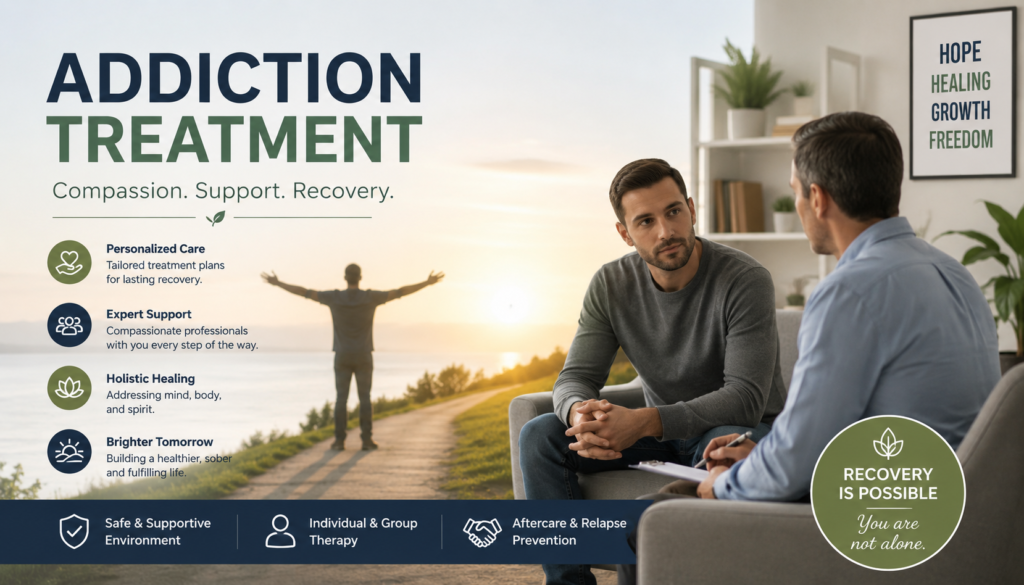
Addiction can affect anyone, regardless of age, background, or lifestyle. Whether it’s alcohol, prescription medications, opioids, or other substances, addiction often impacts physical health, mental well-being, relationships, and daily responsibilities. The good news is that recovery is possible with the right support, and an addiction treatment center provides the professional care needed to begin that journey.
If you’re searching for information about addiction treatment centers, you’re likely looking for answers about how treatment works, what options are available, and how to choose a facility that meets your needs. This guide covers everything you need to know—from treatment programs and therapies to costs, insurance, and long-term recovery—so you can make an informed decision with confidence.
What Is an Addiction Treatment Center?
An addiction treatment center is a healthcare facility that helps individuals overcome substance use disorders through medical care, counseling, therapy, education, and long-term recovery planning. These centers are staffed by trained professionals, including physicians, nurses, therapists, counselors, and support specialists who work together to create personalized treatment plans.
Unlike trying to quit alone, professional treatment addresses both the physical dependence on substances and the emotional or psychological factors that contribute to addiction. Every person’s experience with addiction is different, which is why individualized care is one of the biggest advantages of receiving treatment at a reputable center.
Many treatment centers also provide support for family members, recognizing that addiction affects loved ones as well. Education, family counseling, and ongoing communication can strengthen the recovery process and improve long-term outcomes.
Signs You May Need an Addiction Treatment Center
Recognizing addiction isn’t always easy, especially when substance use gradually becomes part of daily life. However, certain warning signs suggest that professional help may be necessary.
Physical Signs
Physical symptoms often include increased tolerance, withdrawal symptoms when not using a substance, frequent illness, weight changes, poor sleep, and declining overall health. These signs indicate that the body has become dependent on the substance.
Behavioral Signs
People struggling with addiction may withdraw from friends and family, lose interest in hobbies, experience problems at work or school, neglect responsibilities, or engage in risky behaviors. Financial problems related to purchasing drugs or alcohol are also common.
Emotional Signs
Mood swings, anxiety, depression, irritability, low motivation, and feelings of hopelessness often accompany addiction. In many cases, mental health conditions exist alongside substance use, making professional treatment even more important.
For example, someone who began using prescription pain medication after surgery may gradually develop dependence without realizing how severely it has affected their health, relationships, and career until treatment becomes necessary.
How Addiction Treatment Centers Work
Every recovery journey begins with a thorough evaluation. Treatment centers follow a structured process designed to provide safe, effective, and personalized care.
The first step is a comprehensive assessment, where medical history, substance use patterns, mental health, and personal goals are reviewed. This information helps professionals develop an individualized treatment plan.
If withdrawal symptoms are expected, medical detox may be recommended. During detox, healthcare providers monitor patients closely to ensure safety and manage uncomfortable symptoms.
After detox, therapy becomes the foundation of recovery. Individual counseling, group therapy, behavioral therapies, and family counseling help patients understand the root causes of addiction while developing healthier coping strategies.
Before completing treatment, patients work with their care team to create an aftercare plan that supports long-term recovery through continued counseling, support groups, relapse prevention, and community resources.
Types of Addiction Treatment Center
Different levels of care allow treatment to be tailored according to each individual’s needs.
Medical Detox
Medical detox safely manages withdrawal symptoms under medical supervision. Although detox removes substances from the body, it is only the beginning of recovery and should be followed by ongoing treatment.
Inpatient Residential Treatment
Residential treatment provides 24-hour medical and therapeutic support in a structured environment. Patients live at the facility while participating in daily counseling, educational sessions, and recovery activities.
Partial Hospitalization Program (PHP)
PHP offers intensive daytime treatment while allowing patients to return home or to supportive housing in the evenings. It is often recommended after residential treatment.
Intensive Outpatient Program (IOP)
IOP allows individuals to attend therapy several times each week while maintaining work, school, or family responsibilities.
Outpatient Treatment
Standard outpatient care includes scheduled counseling sessions, support groups, and medication management when appropriate. It is suitable for people with stable home environments and lower levels of addiction severity.
Comparison of Treatment Programs
| Program | Best For | Time Commitment | Medical Supervision | Living at Facility |
| Medical Detox | Withdrawal management | 3–10 days | Yes | Yes |
| Inpatient Treatment | Severe addiction | 30–90 days | 24/7 | Yes |
| PHP | Step-down intensive care | Several hours daily | Partial | No |
| IOP | Moderate addiction | Multiple weekly sessions | Limited | No |
| Outpatient | Mild addiction or aftercare | Weekly sessions | As needed | No |
What Types of Addiction Can Be Treated?
Modern addiction treatment centers help individuals recover from a wide range of substance use disorders.
Common addictions treated include alcohol addiction, opioid addiction, heroin addiction, cocaine addiction, methamphetamine addiction, prescription drug misuse, benzodiazepine dependence, marijuana use disorder, nicotine dependence, and polysubstance addiction.
Many facilities also specialize in treating behavioral addictions alongside substance use disorders when appropriate.
Evidence-Based Therapies Used in Treatment
Effective treatment goes beyond simply stopping substance use. It focuses on changing thoughts, behaviors, and coping skills that contribute to addiction.
Cognitive Behavioral Therapy (CBT)
CBT helps individuals identify unhealthy thought patterns and replace them with healthier behaviors that support recovery.
Dialectical Behavior Therapy (DBT)
DBT teaches emotional regulation, stress management, and mindfulness techniques that reduce relapse risk.
Medication-Assisted Treatment (MAT)
MAT combines FDA-approved medications with counseling for certain substance use disorders, particularly opioid and alcohol addiction. This approach can reduce cravings and improve treatment outcomes when medically appropriate.
Motivational Interviewing
This counseling method helps individuals strengthen their personal motivation for lasting change rather than relying solely on external pressure.
Group Therapy
Sharing experiences with others facing similar challenges creates accountability, encouragement, and emotional support throughout recovery.
Family Therapy
Family counseling repairs damaged relationships, improves communication, and helps loved ones become active participants in recovery.
Trauma-Informed Therapy
Many people living with addiction have experienced trauma. Trauma-informed care creates a safe environment where those experiences can be addressed without judgment.
Dual Diagnosis Treatment
Many individuals with addiction also experience mental health conditions such as depression, anxiety, bipolar disorder, or post-traumatic stress disorder (PTSD). This combination is known as a dual diagnosis.
Treating addiction without addressing underlying mental health conditions often increases the risk of relapse. Integrated treatment plans allow healthcare professionals to manage both conditions simultaneously, improving long-term recovery outcomes.
Benefits of Choosing a Professional Addiction Treatment Center
Professional treatment provides far more than a safe place to stop using substances. Patients receive evidence-based therapies, medical supervision, structured daily routines, emotional support, and individualized recovery plans.
Treatment centers also help patients develop healthier coping skills, rebuild relationships, improve physical health, and prepare for life after treatment. Ongoing guidance significantly increases the likelihood of maintaining long-term sobriety.
How to Choose the Right Addiction Treatment Center
Not every facility offers the same level of care. Before choosing a treatment center, consider several important factors.
Look for proper licensing and accreditation, experienced medical professionals, individualized treatment plans, evidence-based therapies, family involvement, dual diagnosis services, relapse prevention planning, and comprehensive aftercare programs.
Reading patient reviews and asking detailed questions during the admissions process can also provide valuable insight into the quality of care.
Questions to Ask Before Enrolling
Before committing to treatment, ask questions that help you understand the services available.
- Is the facility licensed and accredited?
- What therapies are included?
- Are individualized treatment plans provided?
- Is medical detox available on-site?
- Does the center treat co-occurring mental health conditions?
- What aftercare services are offered?
- What are the staff qualifications?
- Does the center accept my insurance?
Cost of Addiction Treatment
The cost of Addiction Treatment Center depending on the level of care, facility amenities, treatment duration, and geographic location.
Residential treatment generally costs more than outpatient services because it includes housing, meals, medical care, and around-the-clock supervision. Additional expenses may include medications, specialized therapies, and extended aftercare services.
Although treatment represents a financial investment, many people find that recovery reduces long-term healthcare expenses, legal costs, and lost income associated with ongoing addiction.
Does Insurance Cover Addiction Treatment?
Many health insurance plans cover addiction treatment services, including medical detox, inpatient rehabilitation, outpatient counseling, and medication-assisted treatment.
Coverage depends on your insurance provider, policy, and medical necessity. Many treatment centers offer free insurance verification, financing options, payment plans, or financial assistance programs to help make care more affordable.
Checking your benefits before admission can help you understand expected out-of-pocket costs.
What Happens During Your First Week?
Starting treatment can feel overwhelming, but understanding what to expect often reduces anxiety.
During the first day, medical staff complete assessments, review your health history, and develop an initial treatment plan. If detox is needed, medical professionals closely monitor withdrawal symptoms.
Over the following days, therapy sessions begin, patients meet their treatment team, participate in group counseling, and establish recovery goals. By the end of the first week, most individuals have developed a structured routine focused on healing and long-term success.
Family Support During Recovery
Recovery is often more successful when families participate in the healing process.
Many addiction treatment centers offer family education programs, counseling sessions, communication workshops, and support groups that help loved ones better understand addiction and learn healthy ways to provide encouragement.
Strong family involvement often improves accountability while rebuilding trust and strengthening relationships.
Life After Treatment
Completing a treatment program is an important milestone, but recovery continues long after leaving the facility.
Aftercare may include outpatient therapy, recovery coaching, sober living communities, alumni programs, peer support groups, ongoing medication management, and relapse prevention planning.
Maintaining healthy routines, avoiding high-risk situations, and staying connected with supportive communities significantly improve long-term success.
Common Myths About Addiction Treatment
Several misconceptions prevent people from seeking help.
One common myth is that detox alone cures addiction. In reality, detox addresses physical dependence but not the psychological factors behind substance use.
Another misconception is that relapse means treatment failed. Recovery is often a long-term process, and setbacks can become valuable learning opportunities when addressed promptly.
Some also believe treatment is only necessary for severe addiction. Early intervention often leads to better outcomes and may prevent addiction from becoming more severe.
What Is the Most Effective Treatment for Addiction?
There is no single treatment that works for everyone. The most effective approach typically combines medical care, behavioral therapy, counseling, family support, and long-term aftercare. Personalized treatment plans that address both substance use and any co-occurring mental health conditions generally produce the strongest recovery outcomes.
What Is the 3 3 3 Rule for Addiction?
The 3 3 3 rule is commonly used as a grounding technique to help manage anxiety, cravings, or overwhelming emotions during recovery. A person identifies three things they can see, three things they can hear, and three parts of their body they can move. While it is not a formal addiction treatment, it can be a useful coping strategy when combined with professional care.
What Are the 7 Stages of Addiction?
Although different models exist, addiction is often described through seven stages:
- Initial use
- Experimentation
- Regular use
- Risky use
- Dependence
- Addiction
- Recovery and relapse prevention
Understanding these stages can help individuals recognize when professional treatment is needed before addiction becomes more severe.
What Is the Hardest Addiction to Quit?
The difficulty of quitting depends on the individual, the substance involved, genetics, mental health, and environmental factors. Opioids, heroin, methamphetamine, nicotine, alcohol, and benzodiazepines are often considered among the most challenging addictions because of intense withdrawal symptoms, strong cravings, or both. Professional medical supervision greatly improves safety and recovery outcomes.
Frequently Asked Questions
How long does Addiction Treatment Center usually last?
Treatment can range from a few weeks to several months. Many residential programs last 30, 60, or 90 days, followed by ongoing outpatient support.
Can I continue working during treatment?
Many people enrolled in outpatient or intensive outpatient programs can continue working while receiving treatment. Residential programs generally require taking time away from work.
Is relapse a normal part of recovery?
Relapse can occur during recovery, but it does not mean treatment has failed. It often signals that additional support or adjustments to the treatment plan are needed.
Can family members visit during treatment?
Many residential treatment centers allow scheduled family visits and encourage participation in family counseling sessions when clinically appropriate.
Do addiction treatment centers treat mental health disorders?
Yes. Many facilities provide dual diagnosis treatment for conditions such as anxiety, depression, PTSD, and bipolar disorder alongside addiction.
What should I bring to an inpatient treatment center?
Most facilities provide a list before admission. Generally, patients bring comfortable clothing, toiletries, identification, insurance information, prescribed medications approved by the facility, and essential personal items.
Conclusion
Choosing the right addiction treatment center is one of the most important decisions a person can make on the path to recovery. Professional treatment provides medical care, evidence-based therapies, emotional support, and long-term planning that address both addiction and its underlying causes. Whether treatment involves detox, inpatient rehabilitation, outpatient counseling, or ongoing aftercare, the goal remains the same: helping individuals build healthier lives and maintain lasting recovery. If you or someone you care about is struggling with addiction, seeking professional help today can be the first step toward a healthier and more hopeful future.
You May Also Read: Home